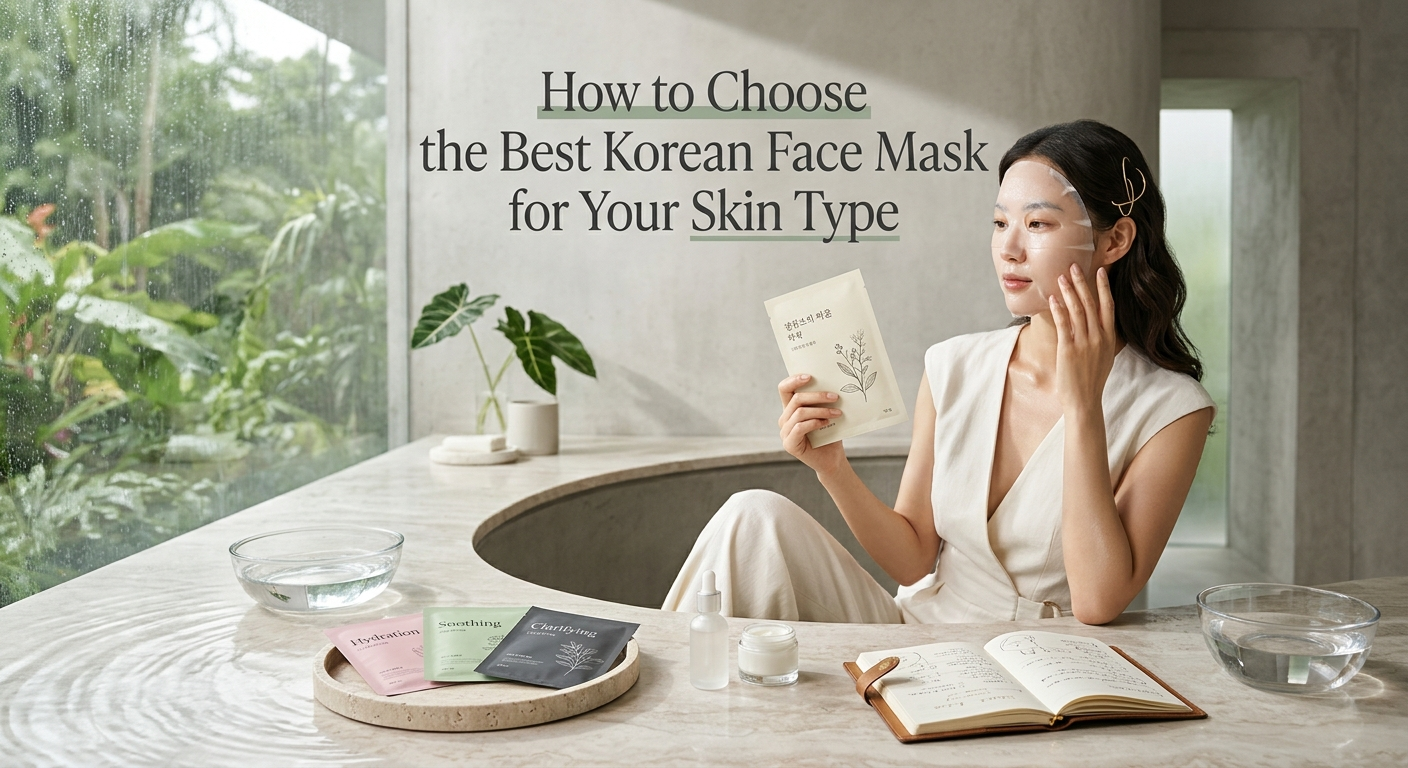
Navigating the vast world of K-beauty can feel overwhelming with the sheer variety of essences, sheet fabrics, and wash-off textures available. Learning how to choose the best Korean face mask for your skin type is the most effective way to ensure your skin receives targeted nourishment rather than unexpected irritation. Whether your primary goal is quenching chronic dryness, controlling persistent midday shine, calming reactive redness, smoothing uneven texture, or comforting blemish-prone complexions, matching your personal skin profile with the right active ingredients and mask format is the key to unlocking a healthy, radiant glow.
Why Does Your Skin Type Matter When Choosing a Korean Face Mask?
Every skin type possesses unique physiological characteristics, varying levels of natural sebum production, and distinct barrier resilience. Because face masks create a semi-occlusive layer that concentrates ingredients against the epidermis, applying an incompatible formula can quickly disrupt your skin’s balance.
For example, a rich, lipid-dense sheet mask formulated with plant butters and heavy oils provides much-needed relief to parched, flaky skin, but that same formula could feel heavy or contribute to clogged pores on an oily complexion. Conversely, an astringent, sebum-absorbing clay mask that clarifies congested pores can leave dry or sensitive skin feeling uncomfortably taut, stripped, and sensitized. Understanding how your skin responds to different humectants, emollients, and botanical extracts ensures that your masking routine feels comfortable, supports barrier integrity, and delivers visible cosmetic benefits without triggering adverse reactions.
How to Identify Your Skin Type Before Choosing a Face Mask
Before investing in new skincare treatments, accurately identifying your baseline skin type is essential:
Dry Skin: Experiences chronic tightness, flaking, a dull or rough texture, and minimal natural oil production throughout the day.
Oily Skin: Features enlarged pores, noticeable surface shine shortly after washing, and excess sebum production across the entire face.
Combination Skin: Displays an oily T-zone (forehead, nose, and chin) alongside normal or dry cheeks.
Sensitive Skin: Easily triggered by environmental changes, synthetic fragrances, or active ingredients, exhibiting redness, stinging, warmth, or irritation.
Acne-Prone Skin: A specific concern profile that can overlap with oily, combination, or even dry skin, characterized by frequent whiteheads, blackheads, inflammatory bumps, or congestion.
The Post-Cleanse Bare-Face Method: To confirm your type, cleanse your face with a mild, low-pH gel cleanser, pat dry with a soft towel, and leave your bare skin completely free of toners, serums, or creams for 30 to 40 minutes.
If your face feels parched, tight, or uncomfortable, your skin leans dry.
If your entire face appears visibly shiny and slick to the touch, your skin is oily.
If your forehead and nose show shine while your cheeks feel taut, you have combination skin.
If your skin feels balanced with no extreme oiliness or tightness, you have normal skin.
If any area develops burning sensations, itching, or blotchy redness during this test, your skin has sensitive characteristics.
Best Korean Face Masks for Different Skin Types
Finding the right Korean face mask requires aligning the formulation’s delivery system and ingredients with your skin’s biological priorities. Below are the optimal textures, active compounds, and practical tips for each profile.
1. Best Korean Face Mask for Dry Skin
Dry skin suffers from an insufficient production of natural lipids and a compromised ability to retain moisture within the stratum corneum. This deficiency results in persistent feelings of tightness, rough patches, and visible dehydration creases. To restore suppleness and comfort, dry complexions require masks formulated with a balanced blend of powerful humectants and barrier-reinforcing lipids.
What to Look For:
Hydrating Humectants: Multi-molecular hyaluronic acid, glycerin, and beta-glucan draw water deep into the surface layers of the skin.
Lipid & Barrier Reinforcers: Ceramides, squalane, panthenol (provitamin B5), and fatty acids help rebuild the damaged intercellular lipid matrix and seal in moisture.
Ideal Mask Formats: Densely soaked microfiber sheet masks, creamy sleeping packs, and nourishing cream-based wash-off masks that leave an emollient cushion on the face.
What to Avoid: Steer clear of aggressive clay or mud masks with high concentrations of bentonite or charcoal, as well as formulas containing high levels of denatured alcohol or strong astringents. These will strip away the meager protective oils dry skin possesses, worsening flakiness and creating barrier fatigue. Always follow your masking session with a rich moisturizing cream to seal in the liquid essence.
2. Best Korean Face Mask for Oily Skin
Oily skin produces excess sebum, creating surface shine and leaving pores prone to congestion and enlarged appearance. However, many individuals with oily complexions make the mistake of over-cleansing and avoiding moisture altogether, which dehydrates the epidermis and causes sebaceous glands to overcompensate by generating even more oil. The goal for oily skin is lightweight, water-based hydration paired with gentle sebum control.
What to Look For:
Clarifying & Balancing Actives: Niacinamide (vitamin B3) helps balance sebum production, while green tea extract (Camellia sinensis) delivers potent polyphenol antioxidants that refresh congested complexions.
Soothing Hydrators: Centella asiatica (cica) and heartleaf (Houttuynia cordata) provide soothing, redness-calming comfort without adding heaviness.
Purifying Clays: Gentle kaolin clay packs temporarily adsorb excess surface grease and dislodge surface residue without over-drying.
Ideal Mask Formats: Refreshing, non-greasy water-gel sheet masks, tencel sheets soaked in liquid ampoules, and clarifying wash-off clay masks.
What to Avoid: Avoid rich, occlusive sheet masks formulated with heavy mineral oils, coconut oil, cocoa butter, or excessive silicones, which can feel suffocating and contribute to clogged pores. Instead, prioritize non-comedogenic, fast-absorbing hydrating serums.
3. Best Korean Face Mask for Combination Skin
Combination skin presents a dual challenge: managing an oily, congestion-prone T-zone (forehead, nose, and chin) while simultaneously soothing and hydrating normal-to-dry cheeks. Applying a single formula across the whole face can leave the cheeks parched or the forehead greasy. Balancing combination skin requires lightweight hydration that replenishes moisture without weighing down oilier zones.
What to Look For:
Universal Hydrators: Glycerin, low-molecular hyaluronic acid, and trehalose deliver clean, weightless moisture that benefits both dry and oily zones.
Balancing Botanicals: Green tea, licorice root extract, and niacinamide calm excess oil production in the T-zone while supporting an even-toned, luminous complexion overall.
Ideal Mask Formats: Lightweight cellulose or tencel sheet masks soaked in fluid, fast-absorbing essences that hydrate without leaving sticky, heavy residues.
The Multi-Masking Technique: Combination skin is the ideal candidate for “multi-masking.” This involves tailoring your application by applying a purifying kaolin clay mask exclusively to the oily forehead and nose to control shine, while simultaneously smoothing a nourishing, hydrating cream or soothing gel mask over the drier cheeks. Ensure both formulas are rinsed according to product instructions for a harmonious, balanced result.
4. Best Korean Face Mask for Sensitive Skin
Sensitive skin has a naturally fragile or reactive moisture barrier that easily triggers inflammation, stinging, and redness when confronted with potential irritants. When selecting a Korean face mask for sensitive skin, simplicity, safety, and barrier-soothing properties are critical. Complex formulations with extensive botanical extracts or artificial additives should be avoided in favor of hypoallergenic, minimalist ingredient lists.
What to Look For:
Calming & Soothing Actives: Centella asiatica and its active compounds (madecassoside, asiaticoside), panthenol, allantoin, and oat kernel extract provide relief to stressed, flushed skin.
Barrier Support: Ceramides and beta-glucan help reinforce weak barrier defenses, reducing moisture loss and external reactivity.
Ideal Mask Formats: Ultra-soft, unbleached cotton or biocompatible bio-cellulose sheet masks that cling gently without causing physical friction, as well as cooling hydrogels that soothe heated skin.
What to Avoid: Carefully inspect ingredient decks to ensure the absence of synthetic artificial fragrances, drying essential oils (such as tea tree, citrus peel, or lavender oil in high amounts), and strong chemical exfoliants (like glycolic acid). Always conduct a patch test behind the ear or on your inner wrist before applying a full sheet mask to your face. While soothing botanicals calm the skin, no cosmetic product can offer an absolute guarantee against individual allergies.
5. Best Korean Face Mask for Acne-Prone Skin
Acne-prone skin is susceptible to micro-comedones, inflammatory papules, and blemishes caused by a combination of excess sebum, sluggish cell turnover, and bacterial proliferation. Individuals dealing with breakouts often need masks that deliver calming, non-comedogenic hydration to counteract the drying effects of topical acne medications (such as benzoyl peroxide or retinoids) without adding pore-clogging heaviness.
What to Look For:
Blemish-Soothing & Clarifying Actives: Niacinamide helps improve the look of post-blemish marks and regulates surface oil. Heartleaf (Houttuynia cordata) and tea tree leaf water offer gentle clarifying benefits, while Centella asiatica minimizes the appearance of redness around active flare-ups.
Mild Exfoliating Agents: Gentle polyhydroxy acids (PHA) or low-concentration betaine salicylate to soften dead skin cell buildup without causing peeling.
Ideal Mask Formats: Calming, featherweight sheet masks and mild kaolin clay masks applied 1–2 times weekly.
Important Realistic Boundary: While clarifying and soothing Korean face masks support a cleaner, calmer-looking skin environment, cosmetic face masks are not standalone medical treatments for cystic acne or chronic inflammatory conditions. Avoid aggressive physical scrub masks or peeling sheets that can cause mechanical friction, rupture lesions, and spread bacteria across the face.
Which Ingredients Should You Look for in a Korean Face Mask?
Korean cosmetic formulators blend nature-derived botanicals with scientifically supported actives to deliver multi-targeted results. When reading product packaging, use this reference table to match active ingredients with your primary skincare goals:
Ingredient
Primary Skincare Role
Best Suited For
Hyaluronic Acid
Binds up to 1,000 times its weight in water to plump surface dehydration.
Dry, dehydrated, and dull skin
Glycerin
Foundational humectant that maintains cellular hydration and supports barrier lipids.
All skin types, especially dry and sensitive
Centella Asiatica (Cica)
Calms visible redness, soothes irritation, and assists barrier recovery.
Sensitive, reactive, and acne-prone skin
Panthenol (Provitamin B5)
Attracts moisture while soothing surface reactivity and enhancing elasticity.
Compromised, dry, and sensitized skin
Niacinamide (Vitamin B3)
Supports barrier lipids, balances surface sebum, and brightens uneven tone.
Oily, combination, dull, and acne-prone skin
Ceramides
Rebuilds the intercellular lipid mortar to prevent transepidermal water loss.
Dry, flaky, and barrier-compromised skin
Green Tea Extract
Delivers antioxidant protection, soothes inflammation, and refreshes oily skin.
Oily, combination, and congested skin
Kaolin & Bentonite Clay
Adsorbs excess surface sebum and dislodges impurities from pores.
Oily, congested, and combination (T-zone) skin
Which Korean Face Mask Type Should You Choose?
Understanding the physical properties of each mask format helps you choose the right texture for your daily schedule and comfort preferences:
Sheet Masks: Pre-cut sheets made from microfiber, cotton, or biodegradable tencel drenched in concentrated liquid essences. They offer intense, rapid surface hydration and are universally convenient for dry, dull, or dehydrated complexions.
Hydrogel Masks: Flexible, jelly-like masks made from water-soluble polymers that mold seamlessly to facial contours. They provide an immediate, refreshing cooling effect, making them ideal for depuffing, calming flushed skin, and post-sun recovery.
Wash-Off Clay Masks: Mineral-rich paste treatments formulated to draw out excess sebum and sweep away surface impurities. Best reserved for oily, combination, and congestion-prone complexions needing a weekly clarifying reset.
Wash-Off Gel/Honey Masks: Conditioning rinsable masks that infuse moisture without hardening on the skin, excellent for comforting dehydrated, sensitive, or tired complexions.
Sleeping Masks: Rich leave-on cream-gels applied as the final step of a nighttime routine. They create a breathable barrier that seals in moisture overnight, making them ideal for dry and chronically parched complexions.
Remember: The active ingredient formulation matters significantly more than the physical vehicle alone. A sheet mask containing irritating ingredients will still irritate sensitive skin, just as a gentle clay mask can comfort oily skin.
How to Choose a Korean Face Mask Based on Your Main Skin Concern
While skin type outlines your baseline oil-to-water balance, your immediate cosmetic concern can vary with weather, travel, stress, and lifestyle:
If Dealing with Severe Dehydration: Prioritize sheet masks featuring multiple molecular weights of hyaluronic acid, glycerin, and beta-glucan to flood both upper and deeper epidermal layers with water.
If Dealing with Dull, Fatigued Skin: Select brightening formulas infused with niacinamide, fermented rice filtrate , sea buckthorn, or arbutin to enhance surface radiance and revive a fatigued tone.
If Dealing with Persistent Excess Oil & Shine: Opt for clarifying wash-off kaolin clay masks paired with sebum-regulating niacinamide and green tea sheet masks.
If Dealing with Transient Redness & Reactivity: Choose hypoallergenic hydrogel or soft cotton masks containing centella asiatica, madecassoside, heartleaf, and panthenol.
If Dealing with Rough, Uneven Texture: Select gentle clarifying masks enriched with mild PHA (gluconolactone) or birch sap to smooth surface flakes without aggressive physical abrasives.
How to Use a Korean Face Mask in Your Skincare Routine
Integrating a Korean face mask into your existing skincare regimen requires correct sequencing to maximize ingredient absorption:
Cleanse Gently: Wash your face thoroughly to eliminate daily debris, makeup, and mineral sunscreen residue, creating an unhindered surface for absorption.
Prep with Toner (Optional): A light splash of hydrating toner balances skin pH and dampens the surface, enhancing essence penetration.
Apply According to Label: Position sheet and hydrogel masks smoothly over facial curves, avoiding the immediate eye and mouth areas. For clay masks, spread an even layer across the skin.
Remove on Schedule: Adhere strictly to the recommended wear time (usually 10 to 20 minutes for sheets; 10 to 15 minutes for clay). Wash off clay masks thoroughly with lukewarm water.
Pat In Remaining Essence: For leave-on sheet masks, discard the fabric while it is still damp and gently pat the remaining serum into your face, neck, and chest.
Seal with Moisturizer: Always apply a suitable moisturizer immediately afterward to form an occlusive barrier that prevents the humectants from evaporating.
Morning Sunscreen: If masking in the morning, always complete your routine with a broad-spectrum sunscreen with SPF 30 or higher to defend your glow against UV degradation.
How Often Should You Use a Korean Face Mask?
Application frequency is dictated by the formulation’s active strength and your skin’s resilience. Purely hydrating and soothing sheet masks containing gentle humectants can typically be enjoyed 2 to 3 times per week to sustain a dewy, plump appearance.
In contrast, deep-cleansing clay masks, charcoal packs, and masks containing active exfoliating acids (AHA/BHA) should generally be limited to once weekly (or up to twice weekly for very oily skin) to avoid stripping the natural lipid barrier.
For a comprehensive breakdown of usage schedules across every mask format and skin profile, refer to our detailed Korean Face Mask Frequency Guide.
Common Mistakes to Avoid When Choosing a Korean Face Mask
Steer clear of these frequent masking errors to protect your skin barrier:
Buying Solely Based on Social Media Hype: Just because a viral mask worked wonders for someone with oily skin does not mean it will suit a dry or sensitive skin barrier.
Ignoring the Full Ingredient List: Focusing on one buzzy marketing ingredient while overlooking drying alcohols, heavy fragrances, or pore-clogging lipids can lead to breakouts or irritation.
Using Overly Drying Clays Until They Crack: Allowing clay masks to bake dry until they crack siphons essential water out of the epidermis. Rinse them off while they are still slightly tacky.
Leaving Sheet Masks on Too Long: Leaving sheet masks on until they dry out allows the thirsty fibers to wick moisture back out from your skin via reverse osmosis.
Skipping the Post-Mask Moisturizer: Without an emollient or occlusive moisturizer to trap hydrating essences, humectants evaporate quickly into dry ambient air.
Introducing Multiple New Masks Simultaneously: Testing multiple new active formulas in a short timeframe makes it impossible to pinpoint which product triggered an adverse reaction.
Frequently Asked Questions About Korean Face Masks
How do I know which Korean face mask is right for me?
Identify your primary skin type (dry, oily, combination, or sensitive) and your immediate skin concern (dehydration, congestion, redness, or dullness). Then, look for masks containing ingredients that target that concern—such as hyaluronic acid for dehydration, centella for redness, or kaolin clay for excess oil.
Can I use a Korean sheet mask if I have oily skin?
Yes. Oily skin frequently suffers from dehydration, which can worsen excess oil production. Choose lightweight, water-gel sheet masks formulated with non-comedogenic humectants like glycerin, hyaluronic acid, green tea, or niacinamide, avoiding heavy oils and thick plant butters.
Should I rinse my face after using a Korean sheet mask?
No, the essences in Korean sheet masks are formulated to be left on the skin. After removing the mask, gently tap the leftover serum into your face and neck, then seal it in with your regular moisturizer. Only rinse off wash-off clay, mud, or peeling masks.
What is the difference between a hydrogel mask and a sheet mask?
Traditional sheet masks are made of woven fabrics (cotton, microfiber, tencel) soaked in liquid serum. Hydrogel masks are made of a slick, flexible gel polymer that provides a noticeable physical cooling sensation and adheres tightly to facial contours, minimizing rapid essence evaporation.
Can sensitive skin use Korean face masks safely?
Yes, provided you choose hypoallergenic, fragrance-free formulas containing proven soothing ingredients such as Centella asiatica, panthenol, allantoin, and ceramides. Always patch-test a small amount of essence on your jawline or inner arm before full application.
Why does my skin feel dry after using a sheet mask?
This typically occurs if you left the sheet mask on too long until it dried out, or if you neglected to apply an emollient moisturizer immediately after removing it. Without a lipid layer to seal in humectants, water rapidly evaporates from the epidermis.
Find the Right Korean Face Mask for Your Skin Type
Selecting the best Korean face mask is ultimately an exercise in listening to your skin and choosing formulations that support its biological needs. By matching target ingredients like hyaluronic acid, ceramides, centella, or gentle kaolin clay to your skin type, and by adhering to proper wear times and post-mask moisturizing, you can transform a simple weekly pampering session into a powerful skincare habit.
To explore an authentic, thoughtfully curated range of Korean sheet masks, hydrogels, clay treatments, and sleeping packs suited for every skin type and concern, discover the collections at KoreanBeautyBar. Always remember to review product labels, conduct patch tests when trying new formulas, and select products that keep your skin feeling comfortable, balanced, and radiant.
About Korean Beauty Bar
Laura Meacham Moore is a licensed nurse and esthetician with 25+ years of skincare expertise. After discovering K-beauty's transformative approach, she founded Korean Beauty Bar to bring authentic, science-backed Korean skincare to the U.S. Laura selects every product based on clinical efficacy, strict Korean beauty standards,