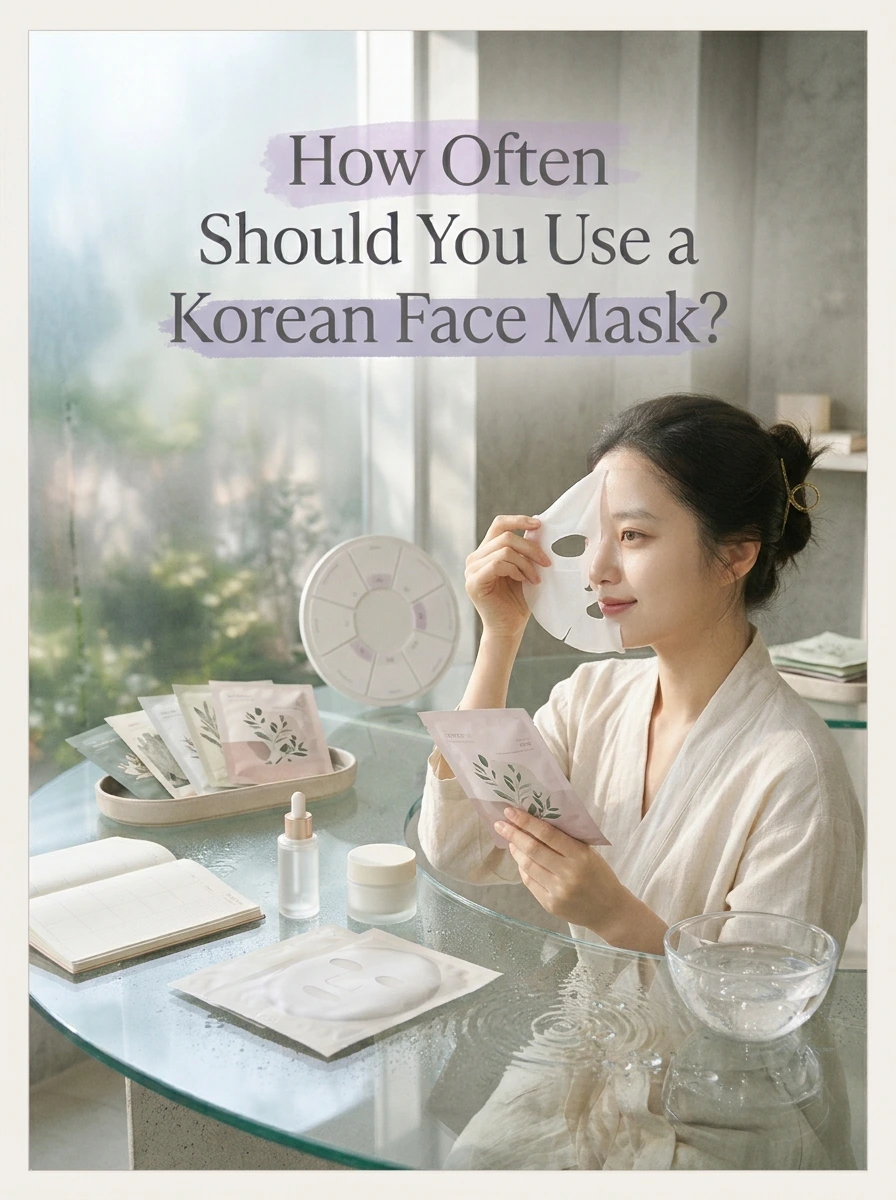
Korean face masks have become a cornerstone of modern skincare routines, celebrated for their ability to deliver concentrated hydration, targeted botanicals, and restorative barrier care. However, when figuring out how often should you use a Korean face mask, there is no single rule that suits everyone. Finding the right frequency depends on the specific mask format, its active ingredients, your underlying skin type, and your skin’s daily tolerance. Masking with intention ensures your skin receives optimal nourishment without unwanted irritation.
How Often Should You Use Different Types of Korean Face Masks?
Korean skincare features a diverse range of mask categories, each engineered with different physical delivery mechanisms and cosmetic goals. Because a clay mask behaves entirely differently on the skin than a hydrating hydrogel or an overnight sleeping pack, applying a blanket schedule across all formats can easily lead to under-hydration or barrier disruption. Understanding the distinct properties of each mask type helps you establish a safe, effective cadence.
How Often Should You Use Korean Sheet Masks?
Classic Korean sheet masks, crafted from soft cotton, cellulose, or microfiber, are drenched in liquid essence packed with humectants. For formulas focused purely on hydration and soothing relief such as those featuring hyaluronic acid, glycerin, or centella asiatica using them 2 to 3 times per week is an ideal baseline for most complexions.
Certain gentle, daily-style sheet masks packaged in bulk tubs are designed for more frequent use. However, if a sheet mask contains resurfacing chemical exfoliants, high concentrations of vitamin C, or astringent botanicals, restrict application to once per week to prevent over-exfoliation and maintain your natural lipid balance.
How Often Should You Use Korean Clay Masks?
Korean clay masks rely on natural minerals like kaolin and bentonite to adsorb excess surface oil and clear away debris from congested pores. Because of their strong sebum-binding capacity, clay masks should generally be used once a week.
If you have very oily skin or reside in a hot, humid climate, you may comfortably tolerate use up to twice weekly focused strictly on the T-zone. However, using clay masks more frequently can strip the skin of its essential lipids, prompting the moisture barrier to compensate with rebound oiliness, tightness, or surface flaking.
How Often Should You Use Korean Mud Masks?
Korean mud masks are mineral-dense treatments typically formulated with marine silt, peat, or volcanic mud. While similar to clay in their cleansing and clarifying capabilities, mud formulations often contain higher concentrations of nourishing trace minerals and conditioning humectants, giving them a creamier, less tightening texture.
Even so, mud masks are primarily deep-cleansing products and are best utilized about once weekly. Some modern Korean mud formulas enriched with soothing ceramides and botanical oils can be used up to twice a week by oily or combination skin types, provided the skin remains comfortable and balanced after rinsing.
How Often Should You Use Korean Hydrogel Masks?
Hydrogel masks are crafted from a cooling, flexible gel matrix that adheres tightly to facial contours, minimizing essence evaporation. Because their primary function is intensive hydration, depuffing, and skin-conditioning, hydrating hydrogels can comfortably be enjoyed 2 to 3 times weekly.
Their soothing physical slip makes them a favorite for post-travel replenishment or prior to special events. As with sheet masks, always review the ingredient profile: gentle soothing hydrogels can be used regularly, whereas hydrogels spiked with exfoliating actives require a more conservative weekly schedule.
How Often Should You Use Korean Sleeping Masks?
Korean sleeping masks are specialized leave-on formulas applied as the final step of an evening routine to seal in hydration and prevent overnight transepidermal water loss. Most rich, nutrient-dense sleeping packs are formulated for use 2 to 3 nights per week, alternating with your regular night cream.
Some lighter gel-cream sleeping masks are formulated mildly enough for nightly application during dry winter months. It is important to note that sleeping masks are leave-on cream treatments—never leave a disposable sheet mask or clay mask on your face overnight.
How Often Should You Use a Korean Face Mask Based on Your Skin Type?
Your underlying skin type determines how resilient your skin barrier is to external treatments and how much hydration or oil absorption it requires. Tailoring your masking frequency to your skin type ensures you receive maximum cosmetic benefits without overwhelming your complexion.
Korean Face Mask Routine for Sensitive Skin
Sensitive skin has a delicate barrier that is easily compromised by excessive product manipulation, synthetic fragrances, essential oils, or aggressive actives. If you have sensitive skin, start conservatively by using a gentle, fragrance-free hydrating or calming mask once weekly.
Select formulas featuring proven soothing agents like Centella asiatica, madecassoside, allantoin, or panthenol. Always perform a patch test on your jawline or inner arm before placing a new mask over your entire face. Only increase use to twice weekly if your skin demonstrates clear comfort and shows no signs of erythema or warmth.
Korean Face Mask Routine for Dry Skin
Dry skin lacks adequate sebum production and frequently experiences surface tightness, flakiness, and rough texture. For this skin type, hydration and lipid replenishment are paramount. Dry complexions thrive when using hydrating sheet masks, hydrogels, or moisture-binding sleeping packs 2 to 3 times per week.
Look for masks loaded with humectants (glycerin, hyaluronic acid) combined with barrier-supporting lipids (ceramides, squalane, fatty acids). After removing the mask, always lock in the humectants immediately with a generous layer of an emollient moisturizer. Clay and mud masks should be used sparingly—at most once every two weeks, or avoided entirely.
Korean Face Mask Routine for Oily Skin
Oily complexions produce surplus sebum, leading to midday shine and visible pore congestion, yet they can still suffer from surface dehydration. A balanced routine for oily skin incorporates a purifying clay or mud mask once a week to absorb excess oil and unclog surface pores.
Alongside purifying treatments, oily skin benefits from lightweight, water-gel sheet masks 1 to 2 times weekly. Hydrating oily skin with non-comedogenic humectants helps prevent sebaceous glands from overcompensating with additional oil production. Avoid heavy, occlusive sleeping masks that may feel suffocating on acne-prone areas.
Korean Face Mask Frequency Chart: How Often Is Enough?
The following chart outlines practical starting frequencies across various Korean face mask categories and skin goals. Use these figures as baseline guidelines and adjust according to your skin’s real-time feedback:
Mask Category
Primary Function
Sensitive Skin
Dry Skin
Oily / Congested Skin
Hydrating Sheet Mask
Infuse water humectants, dewy glow
1x weekly (gentle)
2–3x weekly
1–2x weekly (lightweight)
Soothing Sheet / Hydrogel
Calm redness, cool irritated skin
1–2x weekly
2–3x weekly
1–2x weekly
Exfoliating Sheet Mask
Smooth texture via AHA/BHA/PHA
Avoid or 1x every 2 wks
1x every 10–14 days
1x weekly
Clay / Mud Wash-Off
Absorb sebum, clarify pores
Avoid or spot-treat 1x/mo
1x every 2 weeks
1–2x weekly
Sleeping Mask / Pack
Overnight moisture seal
1x weekly (patch test)
2–3x weekly
1x weekly (gel-based)
What Happens If You Use a Korean Face Mask Too Often?
While masking feels indulgent, more frequent application does not automatically lead to healthier or more radiant skin. In fact, over-masking is a frequent culprit behind sudden skin issues. Saturating the stratum corneum with concentrated liquid essences every day can lead to epidermal maceration a condition where excessive hydration weakens the intercellular lipid matrix and impairs barrier integrity.
Furthermore, using purifying clay or exfoliating masks too often strips away the natural lipid coating that defends against environmental irritants and pathogenic bacteria. When the skin barrier is repeatedly disrupted by over-masking, you may experience persistent dryness, accelerated moisture loss, heightened reactivity to previously tolerated products, and even inflammatory breakouts. Skincare products are formulated to work with your natural physiology, not overwhelm it.
Signs You’re Using Face Masks Too Frequently
If your skin begins reacting negatively to your regimen, it may be signaling that your masking schedule is too aggressive. Common warning signs include:
Persistent Tightness: Skin feels stretched, dry, or taut even after applying moisturizer.
Stinging or Burning: A warm, prickling sensation occurs when applying basic essences, toners, or moisturizers.
Flaking and Peeling: Patches of dry, rough skin appear, particularly around the nose, mouth, and eyebrows.
Unusual Redness: Blotchy, reactive flushing that lingers long after removing the mask.
Sudden Breakouts: Tiny, uniform bumps or irritation-induced breakouts caused by a compromised skin barrier or pore congestion from heavy essences.
If you observe any of these symptoms, immediately pause all mask treatments, eliminate active exfoliants, and simplify your routine to a gentle cleanser, a basic barrier cream, and daily sunscreen until your skin fully resets.
How to Build a Korean Face Mask Schedule for Your Skin
Creating a sustainable weekly schedule involves balancing hydration with targeted clarifying steps, while ensuring you do not stack strong active ingredients on the same day.
Always space out active treatments across the week to allow your skin barrier ample time to rest and rebuild.
Example Weekly Masking Schedule for Dry Skin
Tuesday Evening: Hydrating sheet mask with hyaluronic acid and panthenol for 15 minutes, followed by your daily moisturizer.
Friday Evening: Soothing hydrogel mask to replenish moisture after the work week.
Sunday Evening: Rich ceramide sleeping mask applied as the final step of your nighttime routine to lock in deep hydration for the week ahead.
Example Weekly Masking Schedule for Oily Skin
Wednesday Evening: Gentle kaolin clay or volcanic mud mask applied for 10 minutes to absorb excess oil in the T-zone, rinsed cleanly with lukewarm water.
Saturday Evening: Lightweight, oil-free sheet mask containing heartleaf or tea tree extract to deliver essential water hydration without clogging pores.
Example Weekly Masking Schedule for Sensitive Skin
Sunday Evening: Fragrance-free, hypoallergenic soothing sheet mask with centella asiatica applied for 10 to 15 minutes.
Remaining Days: Focus purely on a streamlined baseline routine of gentle cleansing, barrier support, and sun protection, adding a second masking session only after confirming complete skin comfort.
How to Use a Korean Face Mask Correctly
To get the most out of your masking sessions without compromising your skin barrier, execute each step with proper technique:
Cleanse Thoroughly: Always start with a freshly cleansed face to remove dirt, makeup, and sunscreen that could otherwise hinder absorption or cause congestion under the mask.
Apply Evenly: Smooth sheet and hydrogel masks carefully against your facial contours, ensuring complete contact while avoiding the immediate eye and mouth areas.
Respect the Wear Time: Adhere strictly to the time listed on the package—usually 10 to 20 minutes. Never allow a sheet mask to dry completely on your skin, as drying fibers can draw moisture outward and cause friction.
Remove and Pat: Gently peel the mask off and tap the remaining liquid essence into your face, neck, and décolletage using clean fingertips. Do not wash off hydrating sheet mask essence unless specified.
Seal with Moisturizer: Always apply a moisturizer immediately after patting in sheet mask residue to trap the humectants within your skin. If masking during the day, conclude with a broad-spectrum sunscreen.
Can You Use More Than One Korean Face Mask in a Week?
Yes, incorporating multiple mask formats into a single week is completely fine, provided their active ingredients and intended functions complement one another rather than clash. A widely practiced Korean routine is “multi-masking,” which involves using a purifying clay mask mid-week to clear out pore congestion, followed by a deeply hydrating sheet mask a few days later to restore suppleness.
However, avoid layering intensive clarifying, peeling, or exfoliating masks on consecutive days. Similarly, do not combine an exfoliating wash-off treatment with an acid-infused sheet mask in the same session, as doubling up on actives significantly elevates the risk of barrier disruption, chemical irritation, and redness.
Do You Need a Korean Face Mask Every Day?
The short answer is no. While the popular Korean “one day, one pack” (1 il 1 paek) beauty trend gained global fame through celebrities and social media, daily masking is not necessary to maintain a radiant, healthy-looking complexion. For the majority of people, a consistent daily routine featuring a gentle cleanser, a hydrating toner, a supportive moisturizer, and reliable sunscreen forms the true bedrock of skin vitality.
Daily masking can certainly be done safely if you use exceptionally mild, fragrance-free, humectant-only sheet masks specifically formulated for frequent use. However, for acne-prone, oily, or sensitive complexions, daily occlusion with rich essences can trigger perioral dermatitis, clogged pores, or barrier fatigue. Masking 2 to 3 times a week offers the ideal balance of luxury, targeted efficacy, and barrier safety.
Frequently Asked Questions About Korean Face Mask Skin Care
Can I use a Korean face mask every day?
Some gentle, fragrance-free sheet masks focused solely on basic hydration are formulated for daily use. However, most skin types do not need daily masking, and doing so with rich or active formulas can overwhelm the skin barrier or clog pores.
How many times a week should I use a Korean sheet mask?
Using a hydrating Korean sheet mask 2 to 3 times per week is an effective starting recommendation for most skin types. This frequency delivers consistent moisture without overburdening the skin. Always follow the product label and adjust based on tolerance.
Should I use a clay mask every day?
No. Clay masks should not be used daily because their potent oil-absorbing properties can strip the skin of its natural protective lipids. Daily clay masking often leads to barrier damage, dehydration, and rebound sebum production. Limit use to once or twice weekly.
Are Korean sleeping masks used every night?
Most Korean sleeping masks are designed to be used 2 to 3 nights per week as an intensive moisture treatment. While some lightweight gel formulations can replace your daily night cream, richer barrier packs are best used on alternating nights.
How often should sensitive skin use a face mask?
Those with sensitive skin should begin conservatively by using a gentle, hypoallergenic hydrating mask once weekly. Monitor your skin carefully for any signs of redness or stinging before considering increasing frequency to twice weekly.
Can I use a sheet mask after a clay mask?
Yes, following a purifying clay mask with a gentle, soothing sheet mask can help rehydrate the skin. However, ensure the sheet mask contains only mild, calming humectants like hyaluronic acid or cica, and contains no exfoliating acids or harsh actives.
Final Thoughts: Find the Right Korean Face Mask Schedule for Your Skin
Finding the ideal Korean face mask frequency comes down to understanding the properties of your chosen formula, listening to your skin’s immediate condition, and honoring its natural moisture barrier. Whether you are seeking the weekly purifying benefits of a volcanic clay mask, the plumping surge of a hyaluronic acid sheet mask, or the overnight nourishment of a sleeping pack, consistency and moderation will always deliver the best results.
To discover an authentic, thoughtfully curated collection of Korean sheet masks, hydrogels, clay treatments, and sleeping packs tailored to your specific skin goals, explore the offerings at KoreanBeautyBar and build a masking schedule that keeps your skin glowing, balanced, and healthy.
About Korean Beauty Bar
Laura Meacham Moore is a licensed nurse and esthetician with 25+ years of skincare expertise. After discovering K-beauty's transformative approach, she founded Korean Beauty Bar to bring authentic, science-backed Korean skincare to the U.S. Laura selects every product based on clinical efficacy, strict Korean beauty standards,