If your skin feels tight after cleansing, looks flaky, or seems more easily irritated than usual, you may have come across panthenol while looking for something soothing. It’s common in moisturizers and serums, but what is it, and what can it realistically do for your skin?
Panthenol is a form of provitamin B5 used in skincare for its moisture-binding and skin-comforting properties. It can be a useful ingredient when your skin feels dry or stressed, but it isn’t a cure-all. Here’s how it works, how to add it to your routine, and where it fits alongside ingredients such as hyaluronic acid and ceramides.
What is panthenol?
This provitamin B5 can be converted into pantothenic acid, the form of vitamin B5 naturally involved in the body’s processes. In skincare, it is valued for helping hold onto moisture and for supporting a comfortable-feeling skin barrier.
You’ll see it in various product types, from cleansers to leave-on serums and creams. The formula matters: a cleanser is rinsed off, while a serum or moisturizer stays on the skin. So if you’re specifically looking for a serum or cream with this ingredient, check that the product is designed to be left on and follow its directions.
Why panthenol can do more than hydrate
This ingredient is a humectant: an element that helps attract and retain water in the outer layers of skin. That can make dryness and tightness feel less noticeable. But its appeal isn’t limited to hydration. Topical application has also been studied for its potential to support skin-barrier function and help soothe irritation.
Your skin barrier is the outer layer that helps limit moisture loss and protect against external irritants. When it’s stressed, your skin may feel dry, tight, or more reactive than usual. This ingredient can be one helpful part of a simple, moisturizing routine, though results depend on the whole product formula, and no element works the same way for everyone.
Consider it if your skin often feels dry, tight, or uncomfortable, including after a period of frequent exfoliation or when your usual routine seems to be too much. It may help support hydration and skin comfort while you simplify your routine.
It’s important not to treat symptoms as a diagnosis, though. Stinging, redness, and flaking can have different causes, and persistent or worsening irritation may need advice from a dermatologist. For practical guidance on simplifying a routine when your skin feels reactive, read our article on signs your skin may need barrier repair.
This ingredient is often well tolerated, but it isn’t guaranteed to suit every skin type. If you have sensitive skin or a history of ingredient allergies, check the full ingredient list and try a new product cautiously. Stop using it if you notice a reaction.
Is it the same as hyaluronic acid?
Not necessarily. Both ingredients can help with hydration, but they’re not identical and don’t have to compete.
Hyaluronic acid is a humectant commonly used to attract and hold water in the skin’s outer layers. Panthenol is also a humectant, and it’s valued as well for its potential soothing and barrier-supporting properties. Ceramides are different again: they’re lipids that help support the skin’s protective outer layer.
In practice, you can use them in the same routine. A hydrating serum with hyaluronic acid can sit under a moisturizer that contains panthenol and ceramides. You don’t need to use all three, however; choose products that feel comfortable and make sense for your skin.
How to use panthenol in your skincare routine
For most people, the easiest approach is to use a leave-on product according to its label, then adjust based on how your skin responds. You don’t need a complicated routine or a particular concentration to get started.
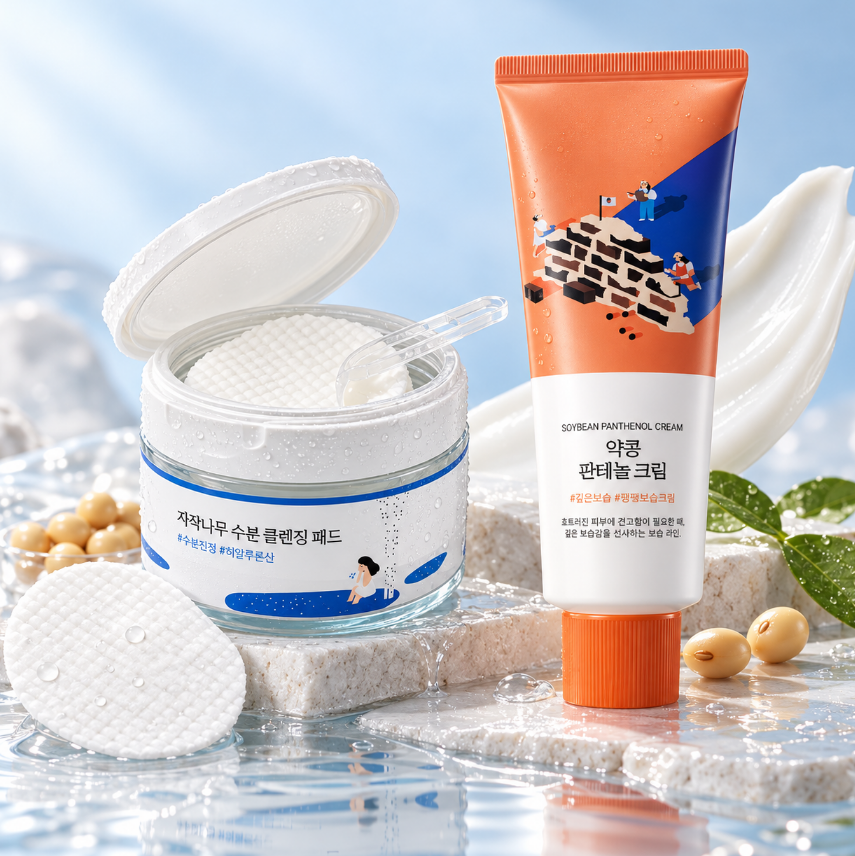
Cleanse gently. Use lukewarm water and a cleanser that doesn’t leave your skin feeling stripped. The Round Lab Soybean Panthenol Cleanser is one option in a cream-to-foam format. As with any rinse-off product, it has less contact time with skin than a leave-on serum or cream.
Apply your leave-on product. A panthenol serum or ampoule can go on after cleansing and before moisturizer. The Round Lab Soybean Panthenol Ampoule is a leave-on option.
Moisturize. Follow with a cream if your skin needs more comfort or you want to add a moisturizing layer. The Round Lab Soybean Panthenol Cream is another option to consider.
Use sunscreen during the day. Panthenol is not sun protection. Keep a broad-spectrum sunscreen in your daytime routine.
You can start once a day and use the product more often if the label allows and your skin is comfortable with it. If you’re introducing other new ingredients, add products one at a time so it’s easier to tell what your skin likes.
If you’re considering a bundle, the Round Lab Hydrate & Barrier Repair Duo pairs the Soybean Panthenol Cream with Birch Juice Cleansing Pads. If your skin is actively irritated or over-exfoliated, be mindful that textured pads may add friction; you can skip them until your skin feels comfortable. You can also browse our moisturizers and hydrating creams for other textures and formulas.
Limitations of this ingredient
Panthenol is not an exfoliant, so it won’t remove dead skin cells. It isn’t an acne treatment, either, and it shouldn’t be used as a substitute for sunscreen or a prescription treatment. If you’re using a prescribed skincare medication, check with your prescriber before changing your routine.
Think of this ingredient as a supportive addition: it may help with hydration and comfort, but it won’t resolve every cause of dryness, irritation, or breakouts. A simple routine your skin tolerates is often a better starting point than adding several new products at once.
Frequently asked questions
Is panthenol the same as vitamin B5?
Panthenol is provitamin B5. Skin can convert it to pantothenic acid, the vitamin’s active form.
Can I use panthenol every day?
Many people use panthenol-containing products daily, but follow the product directions and pay attention to your skin. If a product causes irritation, stop using it.
Can I use panthenol with hyaluronic acid and ceramides?
Yes. They can serve complementary roles in a routine: hyaluronic acid and panthenol help with hydration, while ceramides support the skin’s protective lipid layer. You don’t have to use every ingredient to have a helpful routine.
Is panthenol suitable for sensitive skin?
It’s often well tolerated, but no ingredient is right for everyone. Check the full formula, introduce it cautiously, and discontinue it if you have a reaction.
Panthenol can be a thoughtful addition when dryness or tightness has you looking for a gentler routine. Start with one product, keep the rest of your skincare simple, and let your skin’s response guide what you use next.
This article is for general skincare education and is not a substitute for individualized medical advice.
Until next time, Laura
P.S. Is there an ingredient you keep seeing on labels and want explained? Hit reply and tell me, I read every answer.