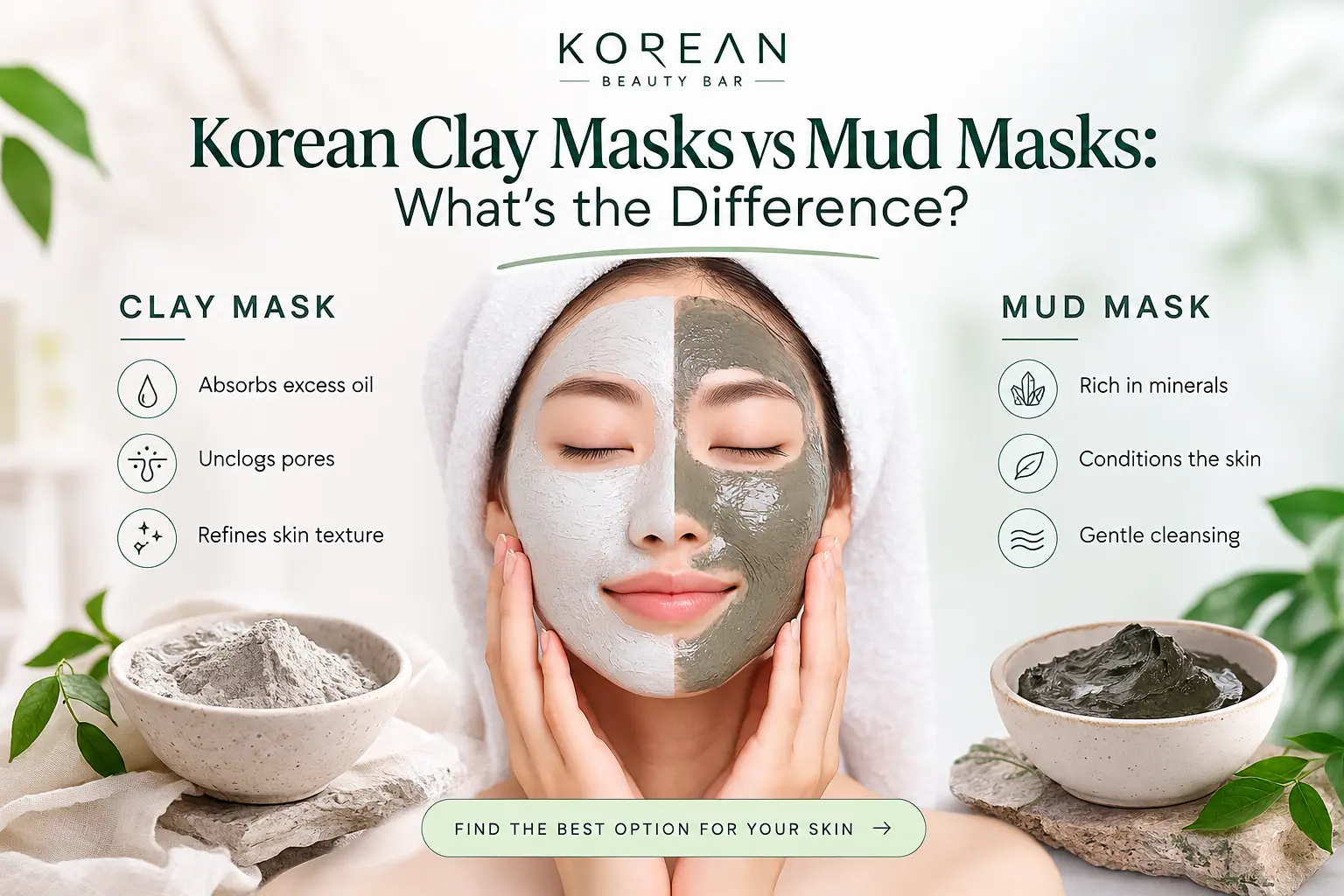
When designing a clarifying skincare routine, wash-off treatments provide targeted care for congested or uneven skin. In K-beauty, two of the most popular wash-off formulas are clay masks and mud masks. If you are comparing Korean clay masks vs mud masks, understanding what’s the difference between their mineral structures, sensory profiles, and moisture levels is essential. While both treatments are used to refresh the complexion, their specific mineral compositions, textures, and finished cosmetic formulations create distinct experiences on the skin. Exploring how each format works will help you choose the most suitable option for your unique skin barrier.
What Is a Korean Clay Mask?
A Korean clay mask is a rinse-off skincare treatment formulated primarily with finely milled, naturally occurring cosmetic clays. The most prevalent varieties include kaolin (a mild, soft silicate clay), bentonite (an absorbent clay derived from aged volcanic ash), and specialized local materials such as Jeju volcanic ash clusters. In cosmetic chemistry, clay particles exhibit a porous physical structure that gives them a high adsorption capacity.
When suspended in an emulsion and spread over the face, these clays attract and bind excess surface sebum, dead skin cells, and daily environmental debris. As the mask dries, it tightens across the epidermis, absorbing oils from the stratum corneum. Korean cosmetic formulators frequently balance these drying clays with soothing botanical extracts and humectants. The primary goal of a Korean clay mask is to leave the skin feeling noticeably cleaner, refined, and less oily without stripping away essential moisture or causing surface irritation.
What Is a Korean Mud Mask?
A Korean mud mask is a rinse-off cosmetic formulation centered around mineral-dense mud deposits sourced from natural aquatic or geological environments. Common sources include coastal marine silt, tidal flat mud (such as mud harvested from the Boryeong coastline in South Korea), peat, or geothermal mineral springs. Unlike pure clay powders, natural mud contains decomposed organic matter, water, and bio-available minerals such as sulfur, magnesium, potassium, calcium, and silica.
Because of this unique blend of organic silt and water, mud treatments typically offer a naturally richer, silkier texture than pure clay. When incorporated into K-beauty formulas, cosmetic mud functions both as a gentle clarifying vehicle and as a skin-conditioning treatment. The exact cosmetic action of a mud mask depends on its origin, mineral concentration, and added hydrators. While mud masks provide gentle surface cleansing, they often focus more on delivering mineral conditioning and preserving surface comfort during the rinse.
Korean Clay Masks vs Mud Masks: Key Differences
While both skincare formats fall under the wash-off category and support surface purification, they differ across mineral composition, rheology, oil-binding strength, and post-rinse skin feel:
It is worth noting that cosmetic formulations frequently blur these boundaries. Many Korean skincare products combine kaolin clay with marine silt or volcanic ash in a single jar to balance oil absorption with skin comfort. As a result, product labels alone do not dictate performance; analyzing the full ingredient list remains essential.
Ingredients and Mineral Composition
Clay masks rely heavily on crystalline mineral silicates like kaolin, bentonite, or montmorillonite. In contrast, mud masks contain natural silt formed by geological sedimentation, giving them a broad profile of trace minerals, sulfur, and organic compounds. Rather than relying on front-label marketing claims like “pure volcanic clay” or “sea mud,” consumers should check the International Nomenclature of Cosmetic Ingredients (INCI) list to see whether clay minerals, aquatic silts, or humectants dominate the formulation.
Texture and Application
Clay masks typically feature a dense, paste-like consistency that spreads into an opaque layer and gradually tightens as the water evaporates. In contrast, mud masks possess a slicker, creamier, and sometimes slightly grainy texture due to natural silt particles. Because mud naturally holds substantial water and organic material, mud formulas often remain moist and supple on the face longer than traditional fast-drying clay pastes, making them easier to spread smoothly.
Oil Absorption and Skin Feel
Clay minerals possess a powerful negative ionic charge and micro-porous surface, making them exceptionally efficient at binding and absorbing surface lipids. This results in a distinctly matte, clarified skin feel after rinsing. Mud masks also absorb surface sebum, but their higher organic and water content generally yields a gentler, more cushioned finish. Neither format is universally superior; the right choice depends on whether your skin seeks significant oil reduction or gentle conditioning.
Cleansing and Exfoliation
During application and rinsing, both mask types help dislodge surface impurities, sweat residue, and loose corneocytes through mild mechanical and surface action. Clay masks excel at binding surface sebum, whereas mineral muds offer mild mechanical smoothing from natural micro-silt particles. However, neither format should be viewed as an aggressive peeling agent or an instant cure for deeply embedded blackheads, which require oil-soluble chemical exfoliants like salicylic acid.
Price and Product Availability
Pricing across Korean clay and mud masks varies primarily based on ingredient sourcing, packaging sophistication, and brand positioning. Specialized local resources—such as patented Boryeong mud or certified Jeju volcanic clusters—may command a moderate premium. However, a higher price tag does not inherently guarantee superior pore refinement or tolerance. Many accessible, drugstore-friendly Korean clay and mud masks deliver well-balanced, reliable performance.
Is a Korean Clay Mask Better Than a Mud Mask?
Neither mask category is inherently better than the other. Instead, each offers specific advantages depending on formulation goals and personal preferences.
A Korean clay mask is particularly advantageous for individuals dealing with prominent midday shine, greasy T-zones, and surface congestion. Its strong adsorption profile directly targets excess sebum, leaving skin feeling matte and refreshed. Conversely, a Korean mud mask appeals to those who want a rinse-off clarifying step without the dry, tightening sensation often associated with setting clays. The presence of natural minerals and organic silt allows mud formulas to refresh the skin surface while maintaining hydration and suppleness. Ultimately, determining which is “better” depends on your skin’s immediate lipid levels, hydration balance, and personal comfort.
Which Mask Is Better for Your Skin Type?
Selecting the right wash-off mask requires matching your skin’s barrier state with the formula’s lipid-absorbing potency:
Korean Clay Mask for Oily Skin
Oily skin types that produce excess sebum throughout the day benefit greatly from bentonite- or kaolin-based clay masks. These minerals bind excess oil around pore openings and reduce shine. Users should follow packaging directions closely, rinsing the mask off before it turns chalky, brittle, or tight to prevent over-drying the epidermis.
Korean Mud Mask for Dry Skin
Dry complexions frequently feel parched after using traditional clay formulas. A moisturizing mud mask enriched with marine silt, glycerin, and emollient plant oils cleanses surface flakes while preserving the skin’s lipid barrier. Looking for formulas labeled “non-drying” or packed with humectants prevents the tight discomfort typical of classic clay treatments.
Clay Masks vs Mud Masks for Combination Skin
Combination skin benefits from targeted application or balanced hybrid formulas. Individuals can apply an oil-absorbing clay mask to the oily T-zone (forehead, nose, chin) while placing a hydrating mud mask or skipping treatment on dry cheeks. This customized approach purifies congested areas without stripping naturally drier zones.
Which Mask Is Better for Sensitive Skin?
Sensitive skin requires caution with both formats. Clay masks can feel excessively tight as they dry, while natural muds with high mineral concentrations or strong earthy aromas can sometimes cause flushing. Look for fragrance-free, kaolin-dominant formulas that remain creamy on the skin, avoiding products packed with volatile essential oils or strong menthol.
Which Mask Is Better for Acne-Prone Skin?
Acne-prone skin often benefits from clay masks that help remove excess surface oils, sweat, and debris that mix with dead skin cells. However, clay masks do not kill acne bacteria or replace targeted acne medication. Choose mild, non-comedogenic formulas that rinse cleanly without leaving behind irritating residues or clogging waxes.
Ingredients to Look for in Korean Clay and Mud Masks
The overall performance of a wash-off treatment depends on how its clarifying minerals interact with supporting skincare ingredients:
Kaolin and Bentonite
Kaolin is a mild, fine-grained silicate clay that gently absorbs oil, making it suitable for delicate skin. Bentonite, an absorbent swelling clay, expands upon contact with liquid and has a powerful capacity to draw out stubborn sebum and surface debris, providing a deep-cleansing sensation.
Mineral-Rich Mud Ingredients
Ingredients like sea silt, peat water, and marine mud deliver minerals such as magnesium, zinc, and potassium directly to the skin surface. These minerals help condition the stratum corneum, supporting a smooth texture without relying solely on oil-binding minerals.
Glycerin and Other Moisturizing Ingredients
Glycerin, hyaluronic acid, and butylene glycol are essential humectants frequently formulated into Korean wash-off masks. By attracting and holding moisture within the product emulsion, they prevent the mask from drying out too quickly on the skin, ensuring a comfortable, non-stripping rinse.
Panthenol and Skin-Conditioning Ingredients
Panthenol (provitamin B5), allantoin, and centella asiatica extracts condition and soothe the skin during the masking process. Their inclusion helps offset potential mechanical irritation or tightness caused by rinse-off clays, leaving the complexion feeling calm and comfortable.
Ingredients and Formulas to Approach Carefully
When selecting a wash-off mask, certain additives can compromise skin comfort:
Synthetic Fragrance and Essential Oils: Heavy perfumes or citrus oils (like bergamot or lemon) added to mask natural earthy odors can cause contact redness, especially under a setting mask.
Cooling Agents (Menthol and Camphor): While they provide a temporary refreshing sensation, these volatile ingredients can trigger vascular dilation and stinging in sensitive barriers.
Harsh Physical Scrub Particles: Coarse walnut shells or large sugar crystals embedded in clays can cause micro-tears when rubbed over delicate skin during the rinse step.
Aggressive High-Drying Formulas: Masks with zero humectants that dry into a stiff, cracked shell can strip natural surface lipids and accelerate dehydration.
How to Use a Korean Clay Mask Correctly
To maximize the benefits of a Korean clay mask while safeguarding your moisture barrier:
Cleanse: Wash your face with a mild, water-based cleanser to remove surface dirt and makeup, then pat dry.
Apply Evenly: Using clean fingers or a silicone mask spatula, spread an opaque, even layer over the face, carefully avoiding the immediate eye and lip contours.
Monitor Dryness: Keep the mask on for 8 to 15 minutes, following packaging instructions. Remove the mask while it is still slightly tacky or pliable to the touch; do not wait until it cracks or flakes.
Rinse Gently: Rehydrate the dried mask with lukewarm water, gently massaging in circular motions to dissolve the clay before rinsing cleanly.
Hydrate & Seal: Follow immediately with a hydrating toner and a nourishing moisturizer to lock in moisture.
How to Use a Korean Mud Mask Correctly
Applying a Korean mud mask follows a similar, gentle protocol:
Prep Skin: Start with clean, slightly damp skin after washing.
Smooth Over Skin: Spread a moderate, continuous layer across the face, focusing on areas with uneven texture or excess oil.
Respect Timing: Leave the formula on for the exact timeframe specified on the package (typically 10 to 15 minutes). Many mud masks remain creamy rather than hardening completely; do not wait for the mask to turn solid before rinsing.
Rinse Thoroughly: Use warm water or a soft, damp washcloth to wipe away the mud smoothly without dragging or scrubbing the skin.
Finish Routine: Apply your regular hydrating serums and barrier-supporting face cream.
How Often Should You Use a Clay or Mud Mask?
Because wash-off clarifying masks bind surface oils, moderation is crucial. For oily or congested complexions, using a mask 1 to 2 times per week is generally sufficient to manage surface shine. Those with dry, sensitive, or combination skin should limit application to once a week or once every two weeks, applying it primarily to the T-zone. If your skin feels tight, flaky, or sensitive after masking, reduce your usage frequency immediately.
Common Mistakes to Avoid With Clay and Mud Masks
Letting the Mask “Bake” Until Dry: Waiting until clay cracks and flakes pulls moisture away from the skin barrier, leading to post-rinse irritation.
Scrubbing Too Hard During Removal: Rubbing dry clay against the face acts like coarse sandpaper. Always re-wet the product thoroughly before washing it away.
Masking Over Compromised Skin: Applying clarifying clays over active eczema flares, open wounds, or sunburned skin will provoke stinging and barrier damage.
Using Masks Daily: Clarifying masks are not intended for daily use; over-masking strips protective sebum and can cause rebound oiliness.
Can You Use a Clay Mask and a Mud Mask in the Same Routine?
Applying both a clay mask and a mud mask to the entire face in a single session is unnecessary and substantially increases the risk of barrier disruption, redness, and dehydration. However, multi-masking—using a clay mask on an oily T-zone and a gentler, mineral-rich mud mask on drier cheeks at the same time—can be a practical, balanced way to treat different facial zones without stressing the skin.
How to Choose the Right Korean Mask for Your Skincare Routine
Finding the right wash-off treatment comes down to a systematic evaluation of your skin’s immediate needs:
Assess Oil Production: Choose clay for heavy sebum control; select mud for balanced mineral conditioning.
Check the INCI List: Look for soothing additions like panthenol, cica, and glycerin to ensure the formula does not over-dry.
Evaluate Sensitivity: Avoid formulas with synthetic fragrances, menthol, or harsh physical scrubs.
Verify Instructions: Note whether the mask is formulated to dry down completely or remain creamy.
To discover a thoughtfully curated collection of authentic, high-performance Korean clay masks, mud treatments, and barrier-supporting skincare, explore the offerings at KoreanBeautyBar to find the right clarifying match for your routine.
FAQs About Korean Clay Masks vs Mud Masks
What Is the Difference Between a Clay Mask and a Mud Mask?
Clay masks rely primarily on absorbent silicate minerals like kaolin or bentonite to soak up surface oil. Mud masks contain natural mineral silt and water, providing a silkier texture and gentle conditioning alongside mild oil absorption.
Is a Korean Clay Mask Good for Oily Skin?
Yes. Korean clay masks formulated with kaolin or bentonite are well suited for absorbing excess surface sebum, refining shine, and leaving an oily complexion feeling clean and balanced when used 1 to 2 times weekly.
Is a Korean Mud Mask Better for Dry Skin?
Generally, yes. Mud masks often contain higher water content, trace minerals, and humectants, making them less likely to leave dry skin feeling uncomfortably parched or tight compared to setting clays.
Do Clay Masks Remove Blackheads?
Clay masks help clear surface oil and loosen dead skin cells around pore openings, but they do not eliminate deep blackheads on their own. Oil-soluble chemical exfoliants like salicylic acid (BHA) are needed for deeper pore clearing.
How Long Should You Leave a Clay or Mud Mask On?
Most formulas should remain on the skin for 8 to 15 minutes. Always remove the mask before it becomes bone-dry, tight, or chalky to protect your skin barrier.
Can Sensitive Skin Use Clay or Mud Masks?
Yes, provided the formula is fragrance-free, mild (such as a kaolin base), and fortified with humectants. Sensitive skin should always patch test first and avoid masks that dry into a rigid, crackable layer.
Final Verdict: Korean Clay Mask or Korean Mud Mask?
When comparing a Korean clay mask and a Korean mud mask, neither holds universal superiority. If your primary objective is managing excess sebum, controlling midday shine, and clarifying clogged T-zones, a well-balanced Korean clay mask is your most effective tool. If you prefer a gentler, more conditioning treatment that nourishes the skin with natural minerals while softly refreshing the surface, a Korean mud mask is the ideal selection. By assessing ingredient lists, respecting contact times, and maintaining consistent post-mask hydration, both treatments can help you achieve a refreshed, healthy-looking complexion.
About Korean Beauty Bar
Laura Meacham Moore is a licensed nurse and esthetician with 25+ years of skincare expertise. After discovering K-beauty's transformative approach, she founded Korean Beauty Bar to bring authentic, science-backed Korean skincare to the U.S. Laura selects every product based on clinical efficacy, strict Korean beauty standards,