FREE SHIPPING
On all US orders over $100
Get 15% off your first order:
100% Authentic K-Beauty
• Direct US Shipping
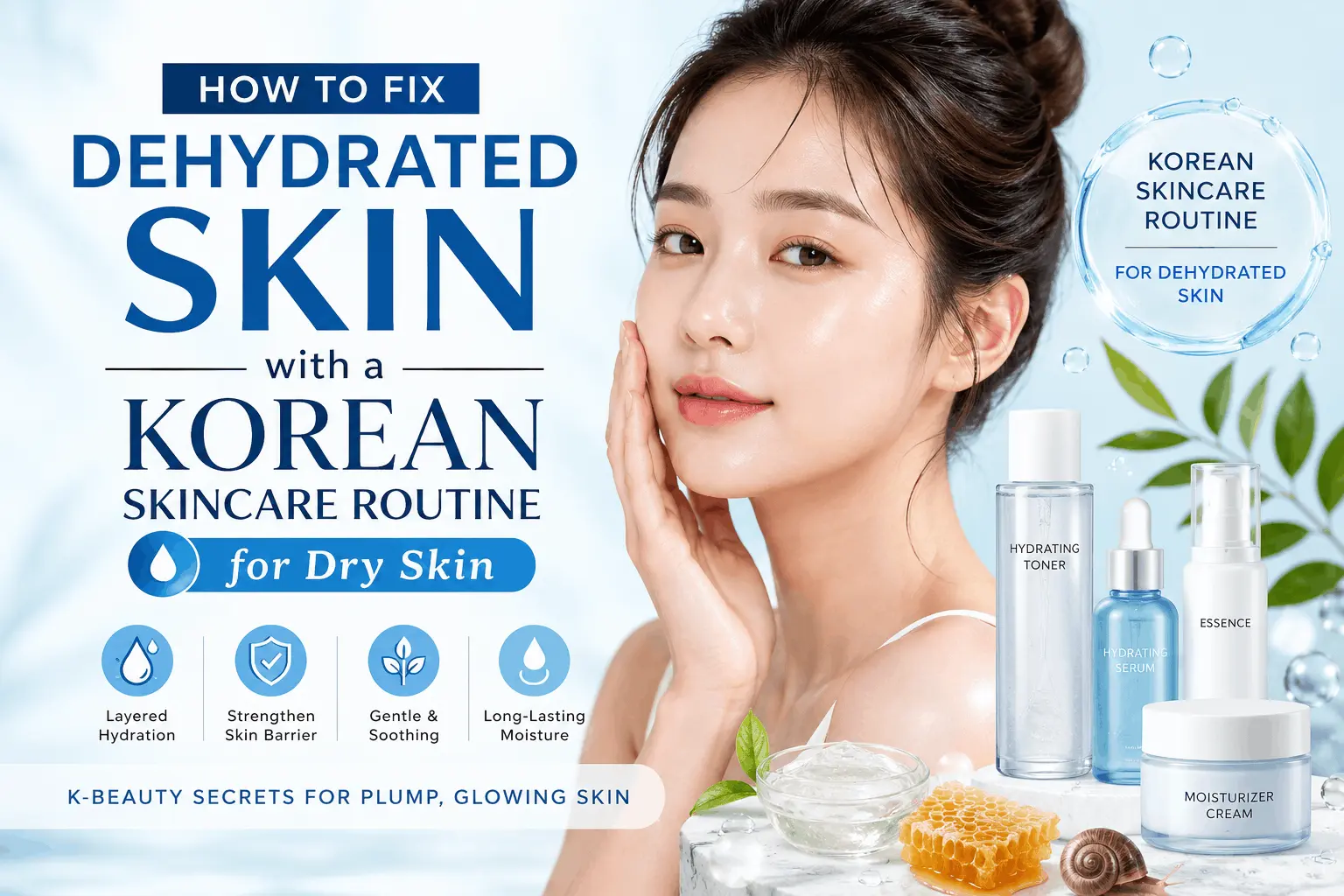
Dry skin refers to a lack of water in your skin. This is a temporary condition and not your permanent skin type. It occurs when factors such as cold temperatures, hot water and harsh soaps remove water from the cells in your skin. This constricts your face, leaving it looking lifeless and is a sign of wrinkles.
This issue can be easily solved with the help of a Korean skincare routine for dry skin. This technique involves a multi-layering approach to skin moisturization, using gentle and watery products to deeply hydrate your skin. After that, there is a good cream to seal all that moisture. Follow this easy step-by-step tutorial to achieve soft, shiny skin.
The dehydrated skin is red, taut, dull, has wrinkles, and is sensitive. Slow snap-back elasticity is evident on the cheek in the pinch test. The skin scales on the surface and the skin underneath is overproducing sebum oil.
Environmental stressors, hot water, cold weather, air conditioning and harsh surfactants takes away water from the skin barrier. Over time, sleep deprivation reduces the moisture in the skin. A lack of essential fatty acids lead to increased TEWL.
There is no such thing as a wrong skin type when it comes to dry skin. Dry skin does not discriminate among skin types. Dry, oily and combination skin types are genetic skin types, while dehydrated skin is a condition. Oily skin often lacks moisture but produces a lot of oil.
The difference between dry and dehydrated skin is that the former is an inability to produce natural oils and the latter is an insufficient amount of water. The first skin type, dry skin, needs lipid replenishment while the second skin type, dehydrated skin, needs water-binding humectants.
The face is surface oily, but tight, rough, flaky and shows the appearance of fine lines temporarily. Makeup fails to last longer than 2 hours after application. Conventional facial oils can’t remedy the tight feeling.
The skin is never oily, has no apparent pores, is constantly prone to peeling and rarely breaks out or shines. This is an inherent genetic lipid deficiency from birth. This skin type benefits from rich emollient creams, which have a soothing effect right away.
| Attribute | Dry Skin | Dehydrated Skin |
| Classification | Genetic skin type | Temporary skin condition |
| Deficiency | Sebum oil and lipids | Water content |
| Pore Size | Small or invisible | Variable pore sizes |
| Texture | Constant rough flakes | Tightness with surface oil |
Blot dry skin and apply a pure botanical facial oil to see which one the skin responds to best to identify the individual epidermal deficiency. If it becomes very tight, very little, or gone altogether, then it’s dry skin; if the tightness is still there under the oil, then it’s dehydrated skin.
The use of a Korean skincare routine for dry skin is effective because it targets replenishing the water in the deeper layers without removing lipids. The structural focus is based on several steps of humectants to restore the moisture barrier.
Multiple thin layers of toners are used to water-saturate the epidermis in the 7-skin method. Lightweight formulas absorb into the skin more deeply than single thick creams. The ingredients that bind water are absorbed in turn into the skin cells.
K-Beauty products have also structural lipids that repair the intercellular cement of the stratum corneum. Ceramide complexes are used to seal the tiny spaces between the cells of the skin. Plant extracts help to reduce swelling which helps to stop further evaporation.
Formulas do not contain harsh denatured alcohols, high-foaming sulfates and aggressive acids that are depleters of natural moisturizing factors. pH-balanced cleansers help maintain the acid mantle. Soothing botanicals nourish the delicate skin tissue.
The routine forms an effective seal via compounds that prevent transepidermal water loss all day long. Fermented ingredients make the products better absorbed over 24 hours. Polyglutamic acid coats the skin surface with a flexible film.
Humectants, emollients and occlusives function together to help to hold moisture in the skin and prevent it from becoming dry. These are certain cosmetic compounds for the restoration of skin barrier.
Hyaluronic acid is one of the strongest humectants that is used and can retain 1,000 times its own weight in water. This molecule causes the tissue space to become puffed up.
Glycerin is a natural moisturising compound that attracts water from the atmosphere to the epidermis. These ingredients do not allow the surface to dry out.
Intercellular lipids called ceramides help to hold skin together and prevent water loss from the skin. This compound helps to strengthen the barrier.
Panthenol is a humectant and skin protectant that turns into pantothenic acid, which can speed up skin repair. This vitamin soothes irritation.
Squalane is an oil that has a stable nature and is similar to the natural sebum secreted by the human body, and softens the texture of the skin. This lipid helps to prevent moisture from evaporating.
Snail mucin is a complex glycoprotein complex that consists of glycolic acid, allantoin and glycosaminoglycans to heal damaged tissue caused by skin. This extract increases elasticity.
The bee resin, known as propolis, is an anti-inflammatory agent that can repair wounds on the skin barrier. This ingredient provides antioxidant benefits.
Centella asiatica is a plant used for medicine, with the compound asiaticoside that helps lower the redness of the skin and stimulates the synthesis of collagen. The extract of this plant heals the skin when it becomes irritated.
Peptides are short amino acid chains that function as ‘messengers’ in the cells, reinforcing the structural proteins. These molecules strengthen the barrier.
The 10-step Korean skincare routine for dry skin is done from the lightest to the heaviest consistency.
A Korean oil cleanser is a cleanser that does not remove the barrier of the skin and cleanses the skin from SPF, makeup and excess sebum. Apply to dry skin, rub for 60 seconds then mix with water. Check for jojoba oil, rice bran oil or mineral oil in the formulas.
The water-based cleanser removes the sweat, dirt and residue from the oil cleanser. Feed with a low pH formula 5.0 – 5.5. Don’t use foamers containing SLS. Apply for 30 seconds and then rinse off with lukewarm water.
A hydrating toner is the first step in the hydration active in the routine. Use 2-3 layers, following the 7-skin technique. Gently rub into the skin instead of rubbing. Keep an eye out for toners containing Glycerin, Beta-glucan and Hyaluronic acid.
As it goes through the mid-dermis, it carries an essence to the skin that is able to penetrate into the skin where toners cannot. Use 4-6 drops, squeeze between hands and pat onto face. Especially for dry skin, use essences containing snail mucin or fermented ingredients.
A serum is a treatment that provides the most powerful active ingredients in the entire treatment regimen. If you have dry skin, opt for serums containing peptides, panthenol or hyaluronic acid. After the essence add 3 to 4 drops.
Sheet masks have a very high concentration of essence applied to the skin surface for 15-20 minutes. Apply 2-3 times weekly for the first 30 days of application. Rinse off after removal is not recommended. Put any leftover serum into the skin.
The skin at the eye area is 0.5mm thick four times thinner than that of the rest of the face. Dries out quicker and has fine lines sooner. Use the ring finger to apply eye cream; not rub.
Few steps have been taken to provide hydration. Moistures seal these. The brands of the best moisturizer for dehydrated skin Korean make use of ceramides, squalane or hyaluronic acid in an occlusive base. Apply when skin is wet.
UV radiation causes hyaluronic acid in the dermis to break down and increases TEWL. Use sunscreen with SPF 30 – 50 in the morning as a last step in your day routine. Apply every 2 hours when in the sun.
The sleeping mask forms an occlusive layer on the skin during the night which prevents the moisture from evaporating during the 6 to 8 hours of sleep. Use it as part of the last part of your evening routine. Please use between 3-4 times a week for best hydration. You can choose any korean face mask for dry skin.
Note:
The ideal Korean beauty for dry skin ingredients are the ones that offer a lot of water with simultaneous lipid replenishment of the skin barrier. These are carefully selected providing calibrated physiological effects.
The most effective moisturizer for dry skin, Korean brands develop uses an emulsion technique that uses a balance of humectants and occlusives. This two-in-one process restores moisture deficiencies in the structure.
Look for formulas with a 3:1:1 ratio of ceramides, cholesterol and free fatty acids. If you have an oily skin type, avoid the use of heavy mineral oils. Choose synthetic dye and drying alcohol-free products.
The Illiyoon Ceramide Ato Cream provides seen lipid spheres to the epidermis. Ample:N Ceramide Shot Cream enhances weak cell walls with 3 types of ceramide. The patented multi-lamellar emulsion structure of Real Barrier Intense Moisture Cream.
Purito Seoul Oat-In Intense Cream is a combination of squalane and oat kernel oil, which relaxes and calms the skin. Round Lab Soybean Panthenol Cream retains moisture with the help of particles from plants, called squalane. Vegreen 73% Citrus Unshiu Fruit Water Cream is an emollient protection in-depth formula.
The COSRX Advanced Snail 92 All In One Cream contains 92% mucin which is directly delivered to the cells of the skin. Within 14 days, Mizon All In One Snail repair Cream reduces dehydration lines.
Isntree Hyaluronic Acid Aqua Gel Cream gives a plumping effect to tissues, without clogging the oil pores. iUnik Centella Calming Gel Cream reduces the surface temperature by utilizing 70% of the water from its leaves. Rich in moisture, Benton Aloe Propolis Soothing Gel offers grease-free hydration to dry areas.
Pyunkang Yul Intensive Repair Cream restores nutrients, which are found in the oil of macadamia seeds, onto the lipid-depleted surfaces. Dr. Jart+ Ceramidin Skin Barrier Moisturizing Cream instantly replenishes the weak layers of the skin. Skin & Lab Barrierderm Intensive Cream offers 48-hour long-lasting moisturization.
The most rapid method to aggravate the dehydration of the skin is to use high foaming surfactants and not to lock the lipids in the skin every day. The following common mistakes may result in poorer cell health.
Three or more washings of the face a day remove the NMF from the epidermis. Only cleanse once at night. In the morning, rinse off with lukewarm water.
The 10% glycolic acid or walnut scrubs penetrate the cell membranes and disrupt the delicate intercellular lipid bonds. Avoid using chemicals more than once a week. Choose mild polyhydroxy acids for the skin type that has been texturized.
When the skin is applied with hyaluronic acid serums, but left bare, the ambient air sucks water back out of the skin. Make sure to seal skin after washing within 60 seconds.
UV radiation causes structural collagen to break down and loss of the protective moisture barrier. Use 2 finger lengths of sunscreen every morning. Reapply protection every 2 hours when in direct sunlight.
Denatured alcohol quickly removes water from the surface and sodium lauryl sulfate dissolves the cell membrane. Always look at the label of ingredients before buying. Use shampoos specifically listed as sulphite free.
It takes 7-30 days of regular barrier repair treatment to heal a damaged SC. The overall period depend on the extent of your initial soft tissue injury.
Flakiness on the surface is eliminated, redness is reduced by 40% and skin tightness is removed. The epidermis keeps the water better at night. Easy to apply but not to leave dry patches.
The whole cell turnover cycle is completed, bringing back the natural radiance and elasticity to the face. Very fine dehydration lines go completely away. Normal balance between oil production.
Seek a licensed dermatologist’s advice if your skin has not improved after 14 days. Topical prescription lipids may sometimes be needed for chronic inflammation.
Some changes in the environment and within your body can help maintain a specific Korean skincare routine for dry skin. These changes are involved in maintaining a constant cell volume.
The deep organs require 2 to 3 liters of water a day. Systemic hydration is important for the maintenance of cellular structures. Don’t use diuretic caffeine drinks more than 1 cup a day.
Cool-mist humidifiers help maintain a perfect humidity level in the home of 40-50%. This helps to keep your face moist as dry air can be unable to pull water out of the face. Set it next to the bed while it is sleeping.
Higher temperatures of warm water dissolves lipids which are natural oils present in skin. Only wash your face with lukewarm water. Limit the total time of bathing to 10 minutes.
The endocrine system regulates the state of epidermal hydration if you get 7 to 9 hours of sleep. It is during sleep that growth hormones repair damaged cell barriers. Use silk pillowcases so that they don’t absorb moisture.
Omega-3 fatty acids are provided to cells by eating wild salmon, eating chia seeds, eating walnuts and eating avocados. These lipids in the diet reinforce the cell walls. Eat good fats every day for structural support for the skin.
Fixing a moisture barrier requires sequential water-focused steps instead of random facial oils. A Korean skincare routine for dry skin provides the desired humectants, emollients and lipids to prevent evaporation. For 30 days, use low-pH cleansers, hydrating essences and ceramides to recover the hydration and cell volume and obtain a lasting shine.
Visit the Korean Beauty Bar to go over all the authentic barrier repair formulas to rejuvenate your healthy glow. Also check 10 step korean skincare routine.
Yes, a Korean skincare routine can help you with water-depleted skin that is oily. This method is applied to the epidermis with oil-free gel creams and watery toners. This method helps to minimize the production of oil and can not cause any active acne.
Use an essence-impregnated sheet mask 2-3 times a week for 15 minutes, to compel water molecules to enter cells. When the mask is worn beyond this period, the moisture in the drying fabric is absorbed back in. Moisturize right after removing.
No, it is not beneficial to increase water consumption on a daily basis, just because the systemic organs are optimized, the surface barrier will not be fixed. Water continually evaporates from the environment, such as through wind and stripping surfactants. Must mix internal with external topical protectants.
Avoid formulations lacking patented ceramide complexes that have been combined in an ideal 3:1:1 ratio along with the cholesterol and free fatty acids. A lipid blend that replicates the natural epidermis, creating a solid barrier of protection. Squalane and snail mucin are great secondary ingredients.
Sure, you’ll need to steer clear of both physical scrubs and harsh alpha hydroxy acids when using sensitive, dehydrated skin. Rough scrubbing, such as with an aggressive exfoliant, disrupts the weak lipid matrix and increases moisture loss. Use mild polyhydroxy acids after 30 days of healing of your barrier.