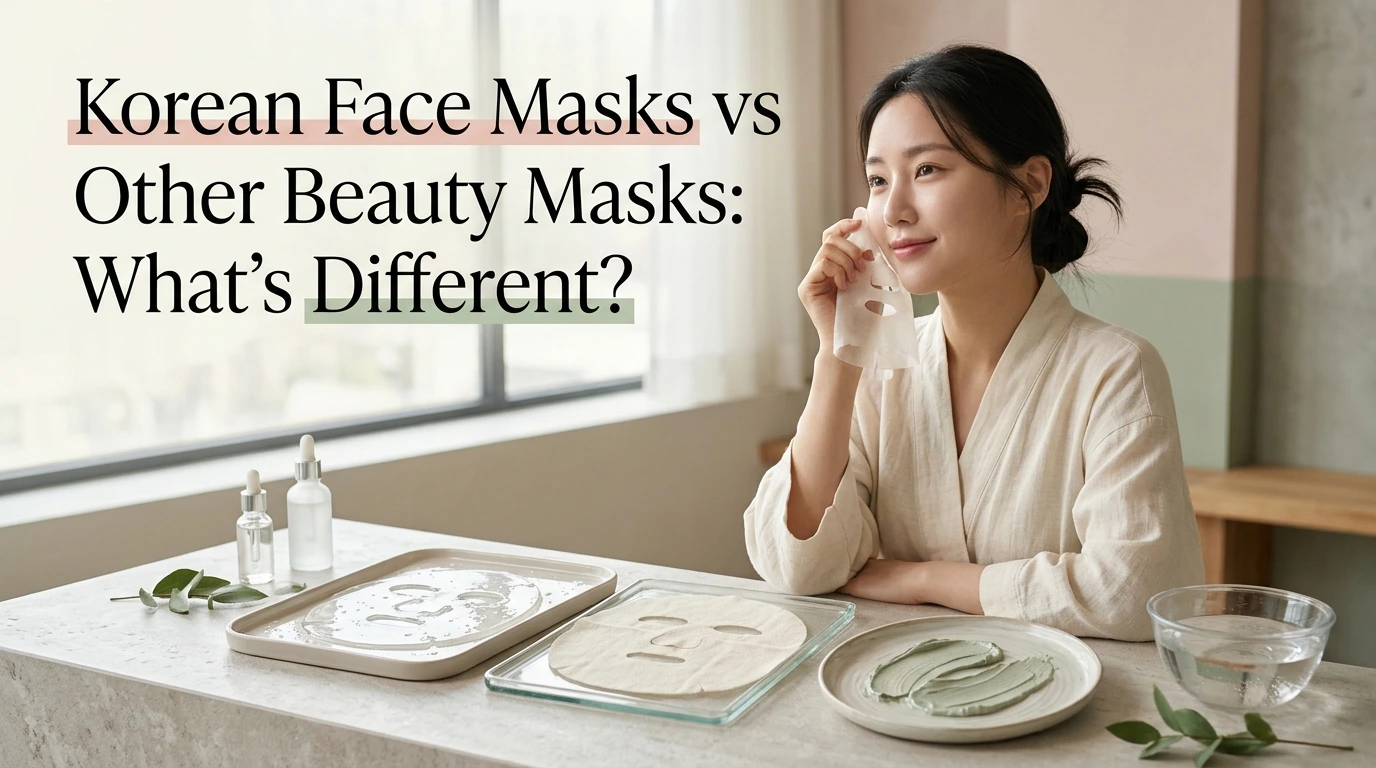
The global rise of K-beauty has brought sheet masks, hydrogels, and sleeping packs to vanity tables worldwide, sparking curious comparisons: Korean face masks vs other beauty masks: what’s different? Consumers often find themselves weighing Korean innovations against Japanese staples, Chinese herbal formulas, and Western clinical treatments. While all beauty masks aim to improve the look and feel of your complexion, they differ substantially in formulation philosophy, hero ingredients, physical delivery vehicles, textural elegance, and how they integrate into daily skincare routines. Understanding these distinct approaches empowers you to choose the exact mask your skin needs.
What Makes Korean Face Masks Different From Other Beauty Masks?
Korean face masks are broadly celebrated for their focus on intensive, water-based hydration, lightweight essence textures, and gentle, non-stripping barrier care. Rather than treating a mask as a harsh, occasional corrective peel, K-beauty positions masking as an extension of a holistic, layered skincare regimen designed to cultivate a healthy, dewy glow.
Korean laboratories have driven major advancements in sheet fabrics from ultra-fine microfibers to biodegradable biocellulose and nutrient-fused hydrogels engineered to maximize essence transfer without physical friction. However, these characteristics represent prevailing market trends rather than universal rules. Cosmetic efficacy depends fundamentally on the overall formulation, ingredient concentrations, and individual skin compatibility rather than a product’s country of manufacture.
Understanding the K-Beauty Skincare Philosophy
The K-beauty philosophy is built on prevention, consistency, and moisture-barrier preservation. Instead of subjecting the skin to high-strength, destabilizing actives that necessitate long recovery windows, Korean skincare focuses on continuous nourishment and equilibrium.
Within this framework, face masks serve as concentrated, temporary boosters rather than replacements for fundamental daily care. A 15-minute sheet mask floods the epidermis with humectants and antioxidants, enhancing the performance of your daily toners, serums, and creams. By prioritizing barrier resilience over aggressive intervention, Korean masks help maintain comfortable, balanced, and radiant-looking skin over the long term.
Korean Face Masks vs Japanese, Chinese, and Western Beauty Masks
Different global beauty markets have developed their own cosmetic traditions, favored formats, and ingredient priorities. While international crossover is widespread, examining these regional market tendencies highlights how each culture approaches the masking experience.
Korean Face Masks vs Japanese Face Masks
Japanese skincare (J-beauty) is renowned for minimalism, clinical precision, and time-tested functional simplicity. In the mask category, Japan pioneered convenient, multi-pack sheet masks packaged in bulk zip-pouches or tissue-style pull boxes containing 7 to 32 sheets intended for swift, daily morning use. These essences often feature a very watery, fast-absorbing consistency designed to prep the face for immediate makeup application.
Korean face masks, while also offering bulk formats, are predominantly packaged as individually sealed, single-use foil sachets drenched in generous amounts of viscous, ampoule-like essence (often 25ml or more). K-beauty also places stronger market emphasis on novelty textures, such as two-piece melting hydrogels, bubbling clarifying packs, and overnight sleeping masks. Both markets offer exceptional hydration and gentle formulas, with substantial technical crossover between their research laboratories.
Korean Face Masks vs Chinese Beauty Masks
Chinese beauty masks (often grouped under C-beauty) draw inspiration from Traditional Chinese Medicine (TCM) alongside modern synthetic cosmetic chemistry. C-beauty formulations frequently highlight traditional herbal extracts such as ginseng root, cordyceps, snow mushroom (Tremella fuciformis), pearl powder, and licorice root, which are utilized for their balancing, revitalizing, and radiance-boosting properties.
In terms of delivery systems, Chinese beauty masks encompass everything from deeply hydrating silk-fiber sheet masks to elaborate wash-off herbal pastes and opulent sleeping jars. While Korean masks emphasize dewy glass-skin aesthetics through modern botanical extracts and barrier lipids, Chinese masks frequently combine time-honored herbal decoctions with modern brightening and firming technologies. Formulations vary widely from heritage medicinal apothecary brands to fast-moving luxury aesthetic labels.
Korean Face Masks vs Western Beauty Masks
The Western beauty market has traditionally favored targeted treatment masks designed to address acute skin concerns quickly. Wash-off purifying clay masks, chemical peeling masks containing high concentrations of alpha-hydroxy acids (glycolic and lactic acids), enzymatic scrubs, and rich emollient cream masks represent standard Western staples.
Western masks often adopt a corrective approach exfoliating dead skin, purging pores, or intensely resurfacing texture which can occasionally leave the skin feeling tight or sensitized if overused. In contrast, Korean masks lean toward replenishment, soothing, and surface hydration. While Western brands have widely adopted sheet masks in recent years, their formulations often retain this active-heavy, treatment-oriented philosophy compared to the barrier-soothing focus characteristic of K-beauty.
How Do Korean Beauty Mask Ingredients Compare With Other Masks?
Cosmetic chemistry is a global discipline, and formulators across all continents share access to primary cosmetic raw materials. What sets Korean beauty masks apart is how they harmonize nature-derived botanicals with scientifically validated actives to support barrier comfort.
Hydrating Ingredients: Hyaluronic Acid, Glycerin, and Ceramides
Hydration is the cornerstone of Korean face masks. Formulations rely on foundational humectants such as glycerin and multi-molecular hyaluronic acid to bind water within the superficial layers of the epidermis. To ensure this hydration does not evaporate, K-beauty masks frequently incorporate skin-identical lipids, particularly ceramides (such as Ceramide NP), cholesterol, and fatty acids. While these ingredients are staples in Western and Japanese skincare as well, Korean sheet masks uniquely suspend them in fluid, non-greasy micro-emulsions that deliver deep moisture without a heavy film.
Soothing Ingredients: Centella Asiatica and Panthenol
Where Western treatment masks often rely on calming agents merely to counteract the irritation caused by strong exfoliating acids, Korean masks place soothing ingredients at the heart of the product. Centella asiatica (cica) and its active isolates (madecassoside, asiaticoside) are staples in Korean sheet and hydrogel masks, offering targeted relief for reactive, redness-prone skin. Paired with panthenol (provitamin B5) and allantoin, these masks provide gentle comfort to stressed skin barriers. However, having soothing ingredients does not guarantee a product will suit every individual’s skin sensitivities.
Traditional and Popular Ingredients: Rice, Snail Mucin, and Green Tea
K-beauty is widely recognized for popularizing unique, nutrient-dense ingredients:
Rice Extracts & Ferments: Used to soften rough surface texture, provide mild antioxidant support, and impart a subtle, healthy luminosity.
Snail Secretion Filtrate (Snail Mucin): Rich in glycosaminoglycans and trace peptides, delivering lasting hydration and conditioning suppleness to dry, tired skin.
Green Tea Extract (Camellia sinensis): Sourced from volcanic regions like Jeju Island, providing polyphenol antioxidants (EGCG) that refresh oily and blemish-prone complexions.
While these ingredients are celebrated in K-beauty, variations of tea extracts, ferments, and conditioning animal or botanical musilages are utilized in cosmetic formulations worldwide.
Korean Face Mask Types: What Formats Are Most Popular?
Korean cosmetic laboratories continuously refine mask materials to improve essence retention and maximize skin contact without causing physical irritation.
Korean Sheet Masks vs Traditional Sheet Masks
The classic sheet mask is an iconic staple of Korean skincare. Traditional or early-generation Western sheet masks often utilized thick, coarse woven non-woven fabrics that dried out rapidly and puckered around the jawline and nose.
In contrast, high-grade Korean sheet masks utilize advanced fabrics including unbleached cotton, cupra, tencel, and ultra-dense bio-cellulose fermented from coconut water. These specialized fibers cling to facial contours like a second skin, forming a uniform barrier that prevents essence evaporation and allows humectants to hydrate the stratum corneum evenly over a 15- to 20-minute wear time.
Korean Hydrogel Masks vs Other Gel Masks
While standard wash-off gel masks are topical jellies rinsed off in the sink, Korean hydrogel masks are pre-formed, flexible sheets fabricated from water-soluble gel polymers. Drenched in concentrated botanical serums, hydrogels mold smoothly against the skin and provide an immediate, soothing physical cooling sensation without requiring refrigeration.
Because hydrogels resist drying out quickly, they provide extended, comfortable hydration that leaves the skin plump, calm, and depuffed—making them ideal for travel recovery or pre-event skin prep.
Clay, Wash-Off, and Sleeping Masks
Beyond sheet fabrics, K-beauty offers diverse wash-off and leave-on categories:
Clay & Mud Masks: Unlike traditional Western clay masks that often dry down to a rigid, cracking crust that can strip essential lipids, Korean clay masks are typically formulated with moisturizing bases (incorporating glycerin, heartleaf, or calming oils). They absorb excess surface sebum while rinsing cleanly away without leaving the skin taut.
Sleeping Masks: Applied as the concluding step of an evening routine, sleeping masks are nutrient-dense cream-gels designed to form a breathable shield over your skincare, locking in hydration throughout the night.
Are Korean Beauty Masks Better Than Other Beauty Masks?
No single country holds a monopoly on skincare excellence, and Korean beauty masks are not universally superior to masks from other regions. Skincare is deeply individual; the most effective product depends on your unique skin physiology, current barrier health, specific ingredient goals, and sensory preferences.
Korean masks are an exceptional choice for individuals seeking gentle, barrier-friendly formulas, lightweight hydration layering, and innovative sheet delivery systems that soften and calm the skin. However, if your skincare objective requires intensive, high-strength chemical resurfacing (such as clinical-strength AHA/BHA peels) or rich, lipid-heavy cold-weather balms, Western dermatological lines or traditional European cream masks may better meet those needs. Evaluating the ingredient deck and product quality is always more reliable than relying on origin claims alone.
Which Type of Asian Face Mask Should You Choose for Your Skin Type?
Selecting an effective face mask requires matching formulation properties to your baseline skin characteristics. Focus on the product’s functional profile rather than where it was manufactured:
How to Choose a Korean Beauty Face Mask That Suits Your Needs
Navigate product shelves confidently by following a structured evaluation process:
Identify Your Primary Skin Concern: Determine whether your skin needs deep hydration, calming support, sebum control, or radiance enhancement.
Select the Appropriate Vehicle: Choose between a fast-absorbing cotton sheet mask, a cooling hydrogel, an overnight sleeping pack, or a clarifying clay treatment based on your daily lifestyle and schedule.
Analyze the Full Ingredient List: Look beyond front-of-package marketing buzzwords. Check the first five ingredients to identify the primary humectants, and confirm where the advertised active botanicals fall on the INCI list.
Screen for Sensitivity Triggers: If your skin is reactive, avoid unnecessary synthetic perfumes, drying denatured alcohols, and concentrated essential oils.
Always Patch Test: Before applying a saturated sheet or clay mask over your entire face, dab a small amount of the essence onto your inner forearm or behind your ear to ensure skin compatibility.
How to Add Korean Face Masks to Your Existing Skincare Routine
Integrating a Korean face mask into your existing morning or evening regimen is straightforward when following proper skincare sequencing:
Wash-off Clay/Mud Masks: Apply immediately after cleansing. Leave on for 10 to 15 minutes, rinse thoroughly with lukewarm water, and proceed with your toners, serums, and creams.
Sheet & Hydrogel Masks: Use after cleansing and toning. Wear for the recommended 10 to 20 minutes, remove while the sheet is still moist, pat the remaining essence into the skin, and seal everything with a moisturizer.
Sleeping Masks: Apply as the final step of your evening routine, directly over your night cream or in place of it, rinsing clean the following morning.
Frequently Asked Questions About Korean Face Masks and Other Beauty Masks
Why are Korean sheet masks so popular compared to Western ones?
Korean sheet masks gained global popularity due to early investments in soft, high-adherence fabrics (such as bio-cellulose and cupra) paired with generous quantities of botanical-rich essences that provide immediate, visible dewy hydration without heavy residue.
Can I leave a Korean sheet mask on until it dries completely?
No. Leaving a sheet mask on until it dries can cause the thirsty fabric to pull surface moisture back out of the skin through capillary action. Remove the mask after 15 to 20 minutes while it is still damp, and pat the residual essence into your neck and face.
Do Korean clay masks dry out the skin like traditional clay masks?
Generally, no. While traditional clay masks often dry down to a brittle, cracking finish that can strip natural oils, Korean clay masks are typically formulated with conditioning humectants, soothing botanicals, and gentle kaolin bases that keep the paste creamy and rinsable.
How do Japanese and Korean sheet masks differ in everyday use?
Japanese sheet masks are often sold in multi-sheet value boxes formulated with light, watery essences designed for quick, everyday morning skin prep. Korean sheet masks are more commonly packaged as individually sealed single packs containing viscous, concentrated treatment ampoules.
Is it necessary to wash your face after using a Korean sheet mask?
No, you should not rinse your face after using a hydrating sheet mask. The liquid residue is essentially a concentrated skincare serum. Gently tap the remaining essence into your face, neck, and décolletage, then follow with your moisturizer.
Are Korean hydrogel masks better than cotton sheet masks?
Neither is inherently superior; they offer different benefits. Cotton and microfiber sheet masks are soft, flexible, and economical for frequent hydration. Hydrogel masks offer a firmer fit, deliver a physical cooling sensation, and resist evaporation, making them ideal for soothing flushed skin and depuffing.
Explore Korean Face Masks at KoreanBeautyBar
Understanding what distinguishes Korean face masks from other global beauty treatments helps you curate a routine grounded in balance, hydration, and barrier comfort. Whether you prefer the gentle purifying touch of a mineral clay mask, the plumping moisture of a classic bio-cellulose sheet, or the refreshing embrace of a cooling hydrogel, the best mask is always the one that respects your skin type and daily needs.
To discover a carefully selected, authentic range of Korean face masks, hydrogels, and overnight sleeping treatments, explore the collection at KoreanBeautyBar. Compare formulations, inspect ingredient profiles, and find the perfect mask to support your skin’s natural health and radiance.
About Korean Beauty Bar
Laura Meacham Moore is a licensed nurse and esthetician with 25+ years of skincare expertise. After discovering K-beauty's transformative approach, she founded Korean Beauty Bar to bring authentic, science-backed Korean skincare to the U.S. Laura selects every product based on clinical efficacy, strict Korean beauty standards,