FREE SHIPPING
On all US orders over $100
Get 15% off your first order:
100% Authentic K-Beauty
• Direct US Shipping
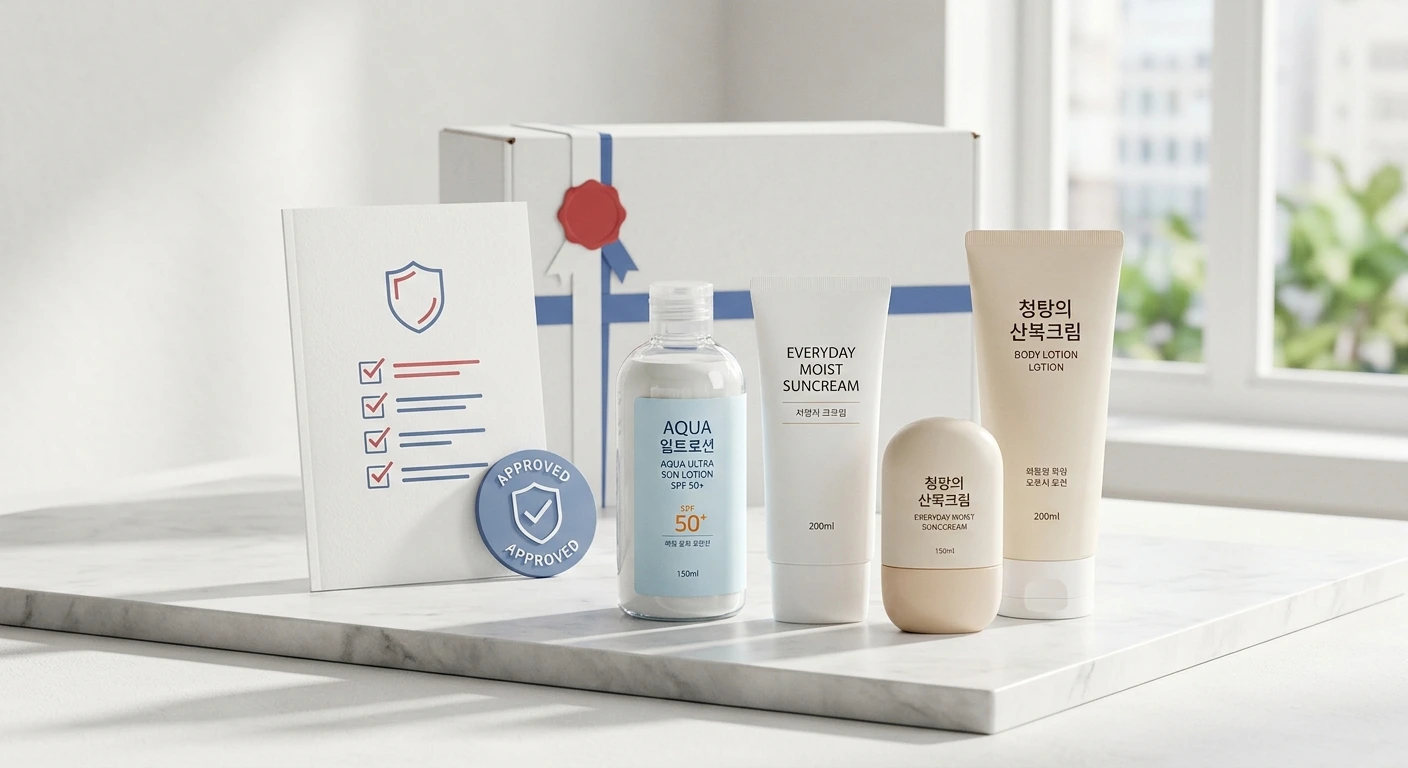
If you have spent any time on skincare social media recently, you have likely encountered the viral claim that “all Korean sunscreen is banned in the U.S.” This headline has caused significant panic among K-Beauty enthusiasts who rely on these formulas for their daily protection. However, saying that is korean sunscreen banned in us is an oversimplification of a complex regulatory reality.
The truth isn’t about a “ban” on Korea as a country; it is about how the United States regulates sun protection and whether a specific product meets those strict requirements. This article will break down the FDA rules, the difference in UV filters, and what you need to know to shop safely in 2026.
To answer the question directly: No, there is no blanket ban on Korean sunscreens. However, many korean sunscreen banned in us headlines refer to the fact that many original Korean formulas cannot be legally marketed or sold as sunscreens within the U.S. commercial market.
The distinction lies in the FDA’s classification of sunscreen. In the U.S., sunscreen is an Over-the-Counter drug, not a cosmetic. If a product contains UV filters that are not currently on the FDA’s approved monograph, or if it hasn’t undergone specific U.S. labeling and testing protocols, it cannot be sold as a “sunscreen” in U.S. retail stores. This is why you might see your favorite K-Beauty SPF labeled as a “moisturizer” or simply unavailable at major U.S. drugstores .
The confusion stems from several factors. Viral TikToks and korean sunscreen banned in us reddit threads often highlight instances where customs officials have seized large commercial shipments of K-Beauty SPF. This happens because those specific products were not registered as OTC drugs with the FDA.
Additionally, consumers notice that popular brands often change their formulas when they officially launch in U.S. retailers like Sephora or Target. This leads to the belief that the “good” ingredients are banned, when in reality, the brand is simply adjusting the formula to use FDA-permitted filters to allow for legal U.S. distribution.
The phrase why is korean sunscreen banned in us is technically a misnomer. The issue is “regulatory non-compliance” for the U.S. market. The FDA requires any product making an SPF claim to use only the active ingredients that have been thoroughly vetted and added to the U.S. sunscreen monograph.
Because many Korean sunscreens use newer, high-performance filters that were only recently considered for U.S. approval, they fall into a legal gray area. If a product hasn’t been registered as a drug, it cannot be legally sold as sun protection in the U.S., leading to the “banned” label used by the media.
The FDA’s approach to korean sunscreen fda compliance is among the strictest in the world. Because sunscreens are intended to prevent skin cancer—a serious medical condition—the FDA regulates them with the same scrutiny as ibuprofen or aspirin.
To be fda korean sunscreen compliant, a product must:
This rigorous process ensures safety and efficacy but also means that the U.S. market often lags behind global innovations in UV filter technology .
In the European Union and South Korea, sunscreens are often classified as “Functional Cosmetics.” This allows for faster approval of new chemical filters. In the U.S., the “drug” classification means any new filter requires years of clinical data to prove it is not only effective but also safe for long-term, daily systemic absorption.
For a K-Beauty brand to enter the U.S. market legally, they must often reformulate. This is why a product like the Round Lab Birch Juice Sunscreen might have different labeling or slightly different active ingredients when sold through official U.S. channels versus being imported directly from Seoul .
Brands often create market-specific versions to satisfy local laws. A Korean formula might use four advanced chemical filters that provide a “weightless” feel, but if three of those aren’t FDA-approved, the brand must replace them with U.S.-permitted filters like Avobenzone or Zinc Oxide. This can change the texture, scent, and “white cast” of the product, which is why some enthusiasts prefer to seek out the original Korean versions.
It is more accurate to say the FDA “has not yet authorized” certain ingredients for OTC use rather than “banning” them. Many filters used in Korea have been used safely in Asia and Europe for decades. The FDA’s caution is based on a lack of specific data that meets U.S. “GRASE” standards, rather than evidence of harm.
Historically, Korean sunscreens have used advanced filters like Tinosorb M, Tinosorb S, and Uvinul A Plus. These filters are known for being highly stable and non-irritating.
A major development in 2026 is the official addition of Bemotrizinol to the permitted U.S. active ingredients list. This is a massive win for K-Beauty fans, as it allows more authentic Korean-style formulas to finally meet FDA standards without significant changes to their performance or feel.
Yes, the regulatory landscape is shifting. With the inclusion of Bemotrizinol in 2026, the gap between Korean and U.S. formulas is closing. However, consumers should still be wary of old social media posts from 2024 or 2025 claiming a “ban,” as these do not reflect the current 2026 approvals that are making it easier for K-Beauty brands to enter the U.S. market legally.
Yes, but only if it meets FDA drug requirements. If a Korean brand registers their product, uses approved filters, and includes the “Drug Facts” panel, it is 100% legal. Examples include brands like Beauty of Joseon or Innisfree, which have specific versions intended for U.S. commercial distribution .
Availability depends on the seller. You can buy FDA-compliant versions at major retailers. You can also still find original Korean-market versions through international K-Beauty exporters. However, you should always check the seller’s reputation and the product labeling to ensure you understand which market version you are receiving.
If you search korean sunscreen banned in us reddit, you will find thousands of confused users. The confusion usually stems from:
Reddit is a great place for anecdotal experience, but it is not a regulatory authority.
To know if your product is a U.S.-compliant version, use this checklist:
The “Drug Facts” panel is the most reliable indicator. If a product has this, it has been registered with the FDA as an OTC drug and is legal for sale as a sunscreen in the U.S.
Compare the active ingredients. If you see Bemotrizinol on a 2026 label, you are looking at a modern, compliant formula. If you see filters like Tinosorb M on a product without a Drug Facts panel, it is likely an original Korean-market import.
Korean-market packaging often emphasizes the PA++++ rating. U.S. packaging must emphasize “Broad Spectrum” and the SPF number, as the PA system is not an officially recognized FDA labeling standard.
“Not FDA Approved” simply means the product has not gone through the specific U.S. drug registration process. It does not mean the product is unsafe. Most Korean sunscreens are tested rigorously under MFDS or ISO standards. They are used by millions of people globally with high safety records.
Neither is universally “better.”
The best product is the one you enjoy wearing every day, as consistency is the key to protection.
The FDA maintains that all sunscreens sold in the U.S. must meet U.S. standards to ensure public health. While they acknowledge that other countries have different systems, they require imported OTC drugs to comply with the same rules as domestic ones to ensure a level playing field for safety and labeling.
No. There is no ban on the country of origin. The “ban” refers to specific products that do not comply with U.S. FDA OTC drug regulations for sunscreens.
The term is misleading. Products are often restricted from commercial sale if they use UV filters not yet on the FDA’s approved list or lack proper “Drug Facts” labeling.
The FDA does not “approve” individual sunscreens. Instead, it sets a “monograph”. If a Korean sunscreen follows those rules and registers, it is legal for sale.
Because Korea regulates sunscreen as a cosmetic, allowing for the use of newer, more cosmetically elegant filters that are still undergoing the longer “drug” approval process in the U.S.
Yes. You can buy FDA-compliant versions at many retailers, or import original versions for personal use from international sellers.
No. It is not illegal for an individual to use an imported Korean sunscreen. The regulations primarily govern the commercial sale and marketing of the products within the U.S.
PA is a Japanese/Korean system for UVA protection. The FDA requires the “Broad Spectrum” label to communicate UVA protection to U.S. consumers.
Yes, some brands reformulate to use FDA-approved filters so they can be sold legally in U.S. stores like Sephora or Amazon US.
The viral claim of a korean sunscreen ban is a myth. The reality is a story of regulatory differences. While many original Korean formulas contain advanced filters that are just now becoming legal in the U.S. , you can still enjoy K-Beauty protection by choosing compliant versions or reputable importers.