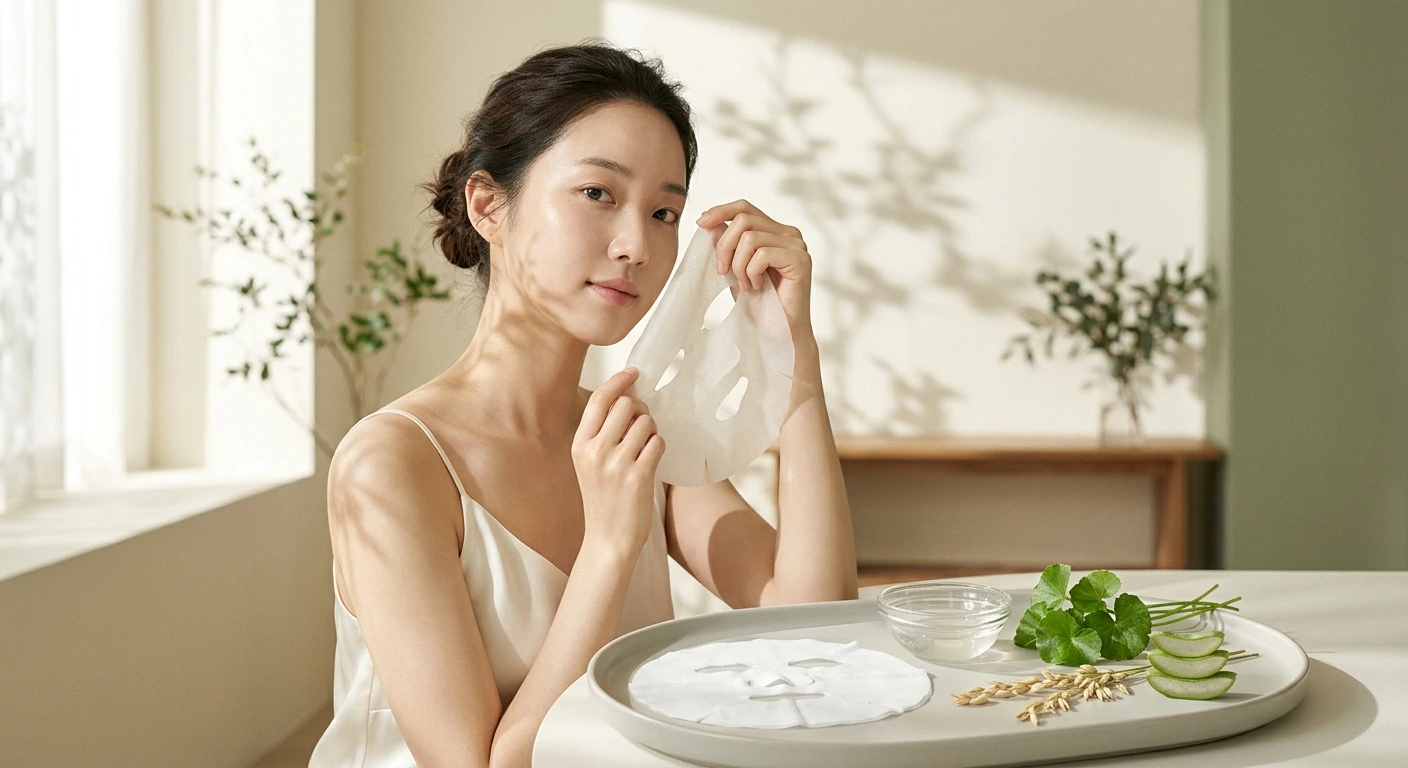
Caring for reactive or easily irritated skin requires careful attention to formulation. For those exploring K-beauty, finding the best Korean face masks for sensitive skin can be an effective way to deliver concentrated hydration, barrier support, and a comforting touch to a delicate complexion. Korean skincare is globally recognized for its focus on soothing botanical extracts, lightweight humectants, and barrier-replenishing lipids. However, because sensitive skin can react unpredictably, selecting the right mask involves understanding which ingredients provide gentle nourishment and which formulations support overall skin comfort.
What Makes a Korean Face Mask Suitable for Sensitive Skin?
A face mask suitable for sensitive skin relies on a minimalist, well-balanced formulation designed to minimize irritation while optimizing hydration and barrier support. Key indicators of suitability include the absence of common irritants such as synthetic fragrances, drying alcohols, and harsh essential oils. Effective formulas often incorporate humectants like glycerin, alongside barrier-restoring lipids and skin-calming botanicals.
It is important to remember that a product is not automatically gentle simply because it originates from South Korea or carries a “natural” marketing claim. The entire formulation matters: the concentration of active ingredients, the preservation system, the pH level, and how the vehicle interacts with your specific skin barrier. Individual sensitivities vary considerably, meaning what soothes one person’s skin could trigger reactivity in another.
Best Korean Face Masks for Sensitive Skin
The following recommendations are evaluated based on their ingredient transparency, low-irritancy profiles, absence of unnecessary fragrance, mask material comfort, and overall suitability for easily sensitized skin.
Best Overall Korean Face Mask for Sensitive Skin
Anua Heartleaf 77% Soothing Sheet Mask is widely appreciated for its minimalist, calming approach. The formula is anchored by 77% Houttuynia cordata (heartleaf) extract, an ingredient renowned for helping ease skin heat and visible irritation. The essence has a watery, non-tacky texture that absorbs cleanly without leaving a heavy film. It avoids artificial fragrance, making it a dependable, gentle option for reactive skin needing lightweight hydration and comfort.
Best Korean Sheet Mask for Sensitive Skin
Abib Gummy Sheet Mask Heartleaf Sticker features a specially woven microfiber sheet designed to seal tightly against facial contours without irritating sensitive skin. Saturated with a gentle, calming essence containing heartleaf and centella extracts, it delivers steady hydration. To use, apply to freshly cleansed and toned skin, leave on for 10 to 20 minutes as directed, and gently pat the remaining serum into the skin.
Best Korean Hydrogel Mask for Sensitive Skin
Biodance Hydro Cera-nol Real Deep Mask utilizes a hydrogel structure formulated with D-panthenol, ceramides, and low-molecular-weight hyaluronic acid. Hydrogel materials naturally provide a gentle cooling sensation upon contact, which can help soothe skin feeling warm or tight. Rather than assuming all hydrogels are inherently gentle, this product stands out because its formulation avoids irritating essential oils and relies on proven barrier-supporting agents.
Best Korean Face Mask for Dry and Sensitive Skin
Etude SoonJung Panthensoside Sheet Mask is formulated specifically for skin that is both dry and prone to stinging or peeling. Combining panthenol (provitamin B5) and madecassoside (derived from Centella asiatica), it replenishes moisture and softens dry, flaky patches without relying on rich, heavy comedogenic oils or artificial fragrances.
Best Korean Face Mask for Redness-Prone Skin
Skin1004 Madagascar Centella Watergel Sheet Ampoule Mask is packed with high-grade Centella asiatica extract to provide immediate hydration and a refreshing, mild cooling effect. Designed for skin experiencing temporary redness and surface discomfort, its light watergel texture comforts irritated barriers. It should be used for comfort and hydration, rather than as a medical treatment for persistent erythema or rosacea.
Best Korean Face Mask for Dehydrated Sensitive Skin
Torriden Dive-In Low Molecular Hyaluronic Acid Mask delivers intense moisture to tight, water-depleted skin using five molecular weights of hyaluronic acid paired with glycerin and allantoin. It provides a plumping surge of hydration without heaviness, helping restore suppleness. Following with a simple moisturizer ensures the newly attracted water stays locked inside the stratum corneum.
Best Fragrance-Free Korean Face Mask for Sensitive Skin
Pyunkang Yul Calming Mask Pack is an exemplary fragrance-free, essential-oil-free choice formulated for reactive complexions. Relying on honeysuckle flower extract, tea tree extract, and ceramides, its published ingredient list contains zero masking fragrances or synthetic perfumes. This makes it an ideal option for individuals with known contact fragrance allergies.
Ingredients to Look for in a Korean Face Mask for Sensitive Skin
When reviewing product labels, prioritize ingredients that provide hydration, reinforce barrier lipids, and condition delicate skin.
Centella Asiatica
Known colloquially as Cica, Centella asiatica and its isolated compounds (madecassoside, asiaticoside) are staples in Korean soothing products. They condition the skin and help reduce visible redness, though individual reactions are still possible.
Panthenol (Vitamin B5)
Panthenol acts as both a humectant and an emollient. It helps retain moisture within the upper epidermal layers, reduces moisture loss, and enhances skin suppleness, making it a valuable addition for barrier-compromised skin.
Ceramides
Ceramides are natural structural lipids found within the skin’s intercellular matrix. Formulations containing ceramides help replenish lipid deficiencies, supporting the barrier and decreasing the look of dryness.
Glycerin and Hyaluronic Acid
Glycerin and hyaluronic acid are classic humectants that draw water molecules into the stratum corneum. Glycerin is exceptionally well tolerated, while multi-weight hyaluronic acid provides layered surface hydration.
Allantoin and Beta-Glucan
Allantoin smooths and conditions rough patches, while oat- or mushroom-derived beta-glucan offers deep moisture-binding capacity to help maintain comfort against environmental stressors.
Oat-Based Ingredients
Colloidal oatmeal and oat kernel extracts contain avenanthramides, which help comfort sensitive, itchy-feeling skin. Always verify that oat formulas are free from added fragrances or irritating botanicals.
Ingredients and Formulas Sensitive Skin May Need to Avoid or Approach Carefully
Sensitive skin often reacts to volatile components and overly aggressive active concentrations:
Synthetic Fragrances and Masking Perfumes: Fragrance additives are among the leading causes of cosmetic contact dermatitis.
Concentrated Essential Oils: Citrus oils (lemon, bergamot, orange), lavender, and peppermint oil contain volatile terpenes that can sensitize skin under the occlusive conditions of a sheet mask.
Drying Alcohols: High concentrations of denatured alcohol (Alcohol Denat.) can strip natural skin lipids, worsening barrier disruption.
Strong Chemical Exfoliants under Occlusion: Glycolic or salicylic acid sheet masks can cause unintended burning or over-exfoliation if left on delicate skin for extended periods.
Fragrance-Free vs. Unscented: What Is the Difference?
Understanding labeling distinctions is critical for sensitive skin:
Fragrance-Free: Means no aromatic chemicals or essential oils have been added to impart a scent.
Unscented: Means the product may contain masking agents or chemicals specifically formulated to neutralize the natural scent of the base ingredients, resulting in no detectable smell while still carrying potential irritants.
Always inspect the full ingredient list rather than relying solely on front-label claims.
Sheet Mask vs. Hydrogel vs. Wash-Off Mask for Sensitive Skin
Mask Type
Material & Experience
Removal
Best Considerations
Sheet Mask
Cotton, tencel, or bio-cellulose soaked in watery serum
Leave-on (no rinse)
High convenience; check material softness to avoid friction.
Hydrogel
Gelatinous serum sheet with a cooling contact feel
Leave-on (no rinse)
Excellent adherence; naturally cooling without cooling additives.
Wash-Off
Cream, honey, or mild gel base rinsed after 10–15 mins
Rinsed with water
Eliminates essence residue; avoid clay formulas if prone to dryness.
How to Choose the Right Korean Face Mask for Your Skin Type
Selecting the right mask requires evaluating your baseline skin characteristics alongside sensitivity triggers:
Sensitive and Dry Skin
Prioritize masks featuring ceramides, panthenol, and creamy essences. Avoid drying alcohols and synthetic perfumes to prevent barrier dehydration.
Sensitive and Oily Skin
Choose lightweight, water-gel essences with glycerin, allantoin, and heartleaf. Avoid heavy plant butters that may feel congesting.
Sensitive and Acne-Prone Skin
Look for minimalist soothing formulas with Centella asiatica or green tea. Avoid high levels of heavy occlusives, and patch test before full application.
How to Use a Korean Face Mask on Sensitive Skin
Cleanse Gently: Wash with a mild, low-pH cleanser using lukewarm water; avoid hot water, which triggers flushing.
Prep: Optionally apply a splash of alcohol-free hydrating toner.
Apply Mask: Smooth gently across the face without stretching the fabric excessively.
Time Strictly: Keep on for 10 to 15 minutes (or per packaging). Never leave it on until dry.
Seal Moisture: Pat in remaining essence gently and follow immediately with a bland, barrier-supporting moisturizer.
Should You Patch Test a Korean Face Mask?
Yes. Squeeze a drop of essence from the pouch and apply it behind your ear or along your jawline 24 hours prior to wearing the full sheet to check for redness, itching, or swelling.
How Long Should You Leave a Face Mask On?
Follow product instructions carefully—typically 10 to 20 minutes. Leaving a sheet mask on until dry can lead to reverse moisture loss and mechanical friction against delicate skin.
How Often Should You Use a Korean Face Mask for Sensitive Skin?
Start conservatively: once or twice per week is plenty. Using a new mask every day increases the risk of product buildup or sensitization. If your skin shows no signs of irritation and responds well to hydration, frequency can be adjusted based on personal tolerance and product guidance.
Common Mistakes to Avoid When Masking Sensitive Skin
Trying Multiple New Products at Once: Introducing several new masks simultaneously makes identifying the cause of an adverse reaction impossible.
Overlooking the Ingredient List: Assuming a cute package or “gentle” claim guarantees safety.
Overusing Exfoliating Masks: Applying acid-rich sheet masks under occlusion can compromise your barrier.
Leaving Masks on Too Long: Allowing sheets to dry completely against the face.
Ignoring Persistent Irritation: Pushing through a stinging sensation under the mistaken belief that “tingling means it works.”
Can Korean Face Masks Help Calm Sensitive Skin?
Moisturizing Korean face masks can effectively support hydration, reduce the feeling of tightness, and temporarily comfort irritated-looking skin. However, they are cosmetic products intended for skin conditioning, not medical treatments. They cannot cure inflammatory skin conditions such as eczema, rosacea, seborrheic dermatitis, or severe allergic reactions.
How to Build a Gentle Korean Skincare Routine for Sensitive Skin
A simple, dependable routine is the best foundation:
AM: Mild water-based cleanser Soothing toner Barrier cream Mineral or gentle chemical sunscreen (SPF 30+).
Introduce only one new product at a time, allowing 1–2 weeks between additions.
When Should You Stop Using a Face Mask?
Remove the mask and rinse your face immediately with cool water if you experience:
Intense stinging, burning, or heat sensations
Sudden itching or prickly feelings
Noticeable swelling or development of hives/bumps
If swelling, blistering, or shortness of breath occurs, seek immediate emergency medical evaluation.
FAQs About Korean Face Masks for Sensitive Skin
What Is the Best Korean Face Mask for Sensitive Skin?
The best choice depends on individual sensitivities. Minimalist, fragrance-free options like Anua Heartleaf 77% Soothing Sheet Mask or Pyunkang Yul Calming Mask Pack are gentle, moisturizing starting points.
Are Korean Face Masks Good for Sensitive Skin?
Many are well-suited due to hydrating, soothing formulas, but suitability is always dictated by the full ingredient list and personal triggers rather than country of origin.
Which Ingredients Are Best for Sensitive Skin?
Glycerin, panthenol, ceramides, madecassoside, and allantoin are dependable, well-tolerated ingredients that support skin hydration and comfort without excessive risk of irritation.
Should Sensitive Skin Avoid Fragrance in Face Masks?
Yes. Artificial fragrances and concentrated essential oils are among the most frequent causes of contact dermatitis and sensitization in delicate skin types.
How Often Should Sensitive Skin Use a Face Mask?
Starting with once or twice a week is recommended. Monitor your skin’s comfort level and adjust usage based on label instructions and personal tolerance.
Can I Use a Face Mask if I Have Eczema or Rosacea?
Consult a board-certified dermatologist first. During active flare-ups or when the barrier is cracked, applying occlusive sheet masks can trigger stinging or worsen inflammation.
Final Thoughts: Choosing a Korean Face Mask for Sensitive Skin
Finding the ideal face mask for sensitive skin comes down to prioritizing ingredient transparency, avoiding known irritants like fragrances and drying alcohols, and respecting your skin’s individual tolerance limits. By focusing on formulas rich in humectants, ceramides, and calming botanicals like heartleaf and centella, you can enjoy hydrating mask treatments that keep your skin feeling calm and supple.
To discover a thoughtfully curated collection of gentle, fragrance-free, and barrier-supporting Korean skincare, explore the offerings at KoreanBeautyBar to find your skin’s ideal match.
About Korean Beauty Bar
Laura Meacham Moore is a licensed nurse and esthetician with 25+ years of skincare expertise. After discovering K-beauty's transformative approach, she founded Korean Beauty Bar to bring authentic, science-backed Korean skincare to the U.S. Laura selects every product based on clinical efficacy, strict Korean beauty standards,