FREE SHIPPING
On all US orders over $100
Get 15% off your first order:
100% Authentic K-Beauty
• Direct US Shipping
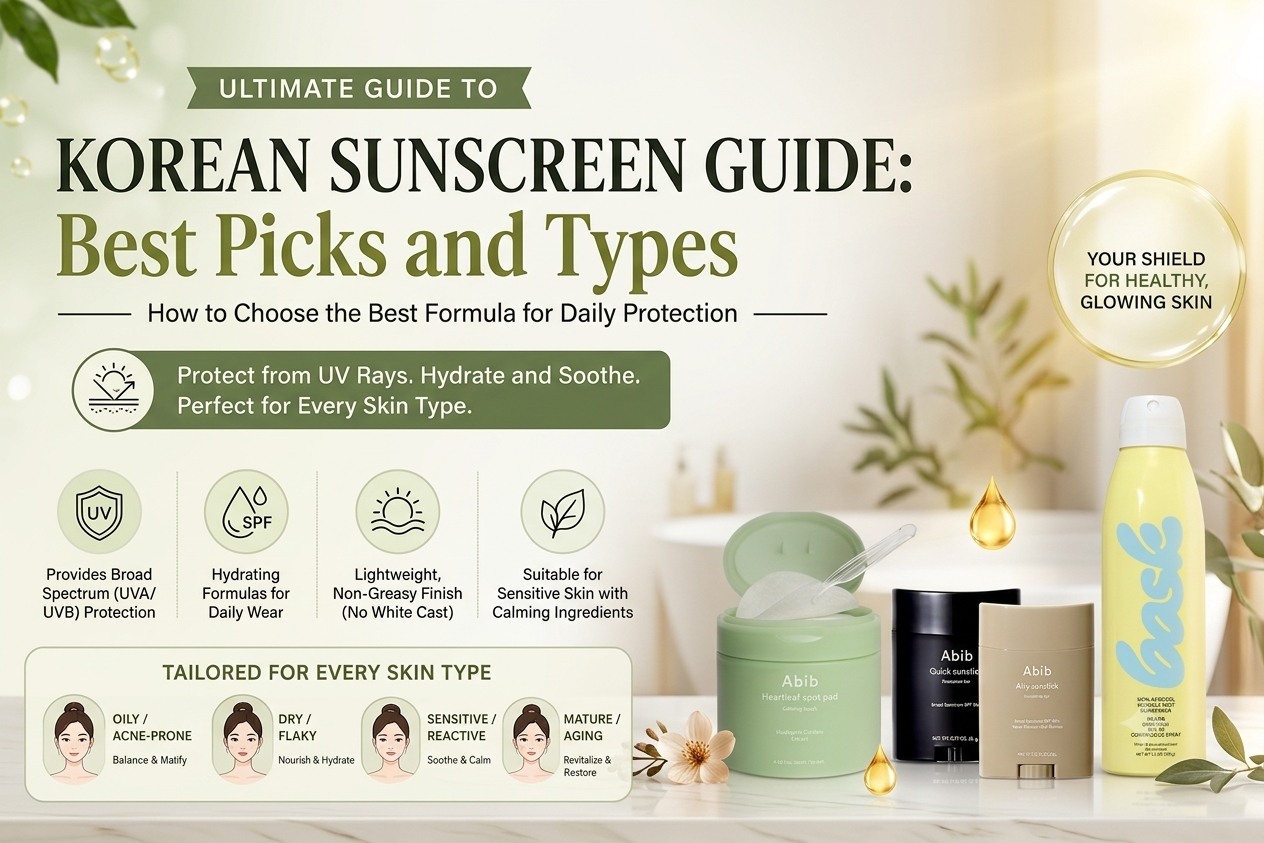
Sun protection is a major part of any skin care routine. The popularity of Korean sunscreen products has increased due to their lightweight formulas, strong UV protection and skin care properties. Korean sunscreens are made with lighter, less greasy formulations that are designed to be worn daily, as opposed to traditional sunscreens that may feel heavy or sticky. It explains everything you should know: what sets Korean sunscreen apart, the different types and ingredients and which brands and products to incorporate into your skincare regimen.
You can browse our full, curated collection of Korean sun care products here.
The main difference is the texture and finish. Generally, Korean suncream is designed to absorb fast, cause no white residue and provide a fragrance rather than a heavy cream. Sunscreen technology in the Korean skincare market is all about multi-taskers as most Korean sunscreens contain ingredients that provide soothing, brightening or moisturizing benefits in addition to SPF.
This is why so many people opt for Korean sun care products instead of Western products; the idea of Korean sun care formulation is not only to block the sun but to make it something you want to do every day.
Yes, for most people, particularly those who wear make-up or live in a damp environment. Korean formulas are designed to be lightweight, which usually means that Korean sun cream is easy to layer under a moisturizer, makeup or on bare skin and will not pill or leave a greasy film. Many also contain skin barrier-supporting ingredients so not only are you shielding your skin from UV damage, you are also taking care of it.
This two-in-one idea is one of the main components behind why Korean face products are so popular with people and a key step in their beauty regimen.
Not all sunscreens are the same and understanding the distinctions will assist you in picking one that is ideal for your skin and lifestyle.
A big part of the Korean skin care sunscreen’s popularity is the range of application types that you won’t find with regular sun care products.
If you want to learn which texture works best for you and who it’s best for, our article, Korean Sunscreen Formats Explained, covers this in great detail.
People looking for the best Korean Sunscreen for face typically are looking for something that can do three things: can protect the face from both UVA and UVB rays, has a non-greasy texture and contains ingredients that nourish the skin instead of clogging pores.
Some of the best choices from our collection:
They are both great options for daily use if you’re new to K-beauty sun care. In Best Korean Face Sunscreen, we have covered this in a whole feature, side by side, which will focus on textures and finishes.
The operational gap between South Korean sunscreen and Western options comes down to regulatory speeds and ingredient options.
High-tech UV filters in South Korea that block UVA and UVB rays and are light on the skin. The older ingredients that sun care manufacturers use and were approved decades ago are used in their products, leading to thicker, chalkier formulations.
Although facial sunscreen is in focus, the neck, chest, arms and hands are equally exposed to damaging UV rays and are likely neglected. The ideal body sunscreen spreads easily and does not rub off on the skin or leave a film behind on any clothes.
Our Sun Care collection and sprays are light, fast-absorbing, non-oily and perfect for reapplication throughout the day. If protection of your body is missing, then our guide, Best Korean Body Sunscreen for Everyday Sun Protection, takes you on a journey about how to make the habit a simple and consistent one.
There are two methods of choosing the Korean sunscreen type: physical mineral sunscreens and organic chemical absorbers.
Mineral types reflect light away from the skin barrier with zinc oxide and titanium dioxide. Chemical types absorb UV light with modern organic molecules, which release the UV radiation in harmless and tiny amounts of heat. Korean chemical versions are unique in the world due to their non-poisonous nature to the skin, with no white residue.
It’s one of the most frequently asked questions and the answer is: it depends on the type of skin you have.
To get an individual breakdown, please refer to our guide: Best Korean Sunscreen for Your Skin Type, where we pair up formulas with skin concerns.
Not every Korean Sunscreen is the same and some have established a strong reputation for consistency, texture and formulation.
You can browse all available options by brand directly through our Sun Care shop, where new arrivals from these popular korean sunscreen brands are added regularly.
No, Korean Sunscreens are not banned in the US. The fact is that sunscreen regulations are different for Korea and the USA and sometimes make people a little confused about ingredient approval and labeling. The products are not unsafe; it just means they are tested differently from FDA-approved sun products sold in the United States. In our explainer, Is Korean Sunscreen Banned in the US? We have break down what it entails and debunk some of the common myths associated with it. The Facts about FDA Rules.
Sunscreen should be reapplied about every two hours, particularly if you’re outdoors for long periods of time, no matter the format. This is another format reason why it’s easier to re-apply over makeup or clothing without taking off your style: stick or spray format!
The best Korean sunscreen is the one that matches your skin type and your daily routine in terms of the formula, format and finish. From a light face sunscreen to a lotion that absorbs quickly into the skin, the best one for you should feel more like a skincare routine you look forward to performing than an obligation.
Visit our complete collection of authentic, USA-shipped Korean sunscreens in the Sun Care collection and stay tuned as we create detailed format, ingredient, skin type match and brand-specific reviews throughout this article.
Yes. The sun care industry in Korea boasts many gentle botanicals such as Centella Asiatica and heartleaf that help to calm redness and skin irritation.
Fortunately, some of the most reliable Korean sun protection products are also budget-friendly! You don’t have to pay the big bucks for actual broad-spectrum coverage and that signature lightweight Korean finish!
There are a few great, affordable options that never disappoint:
Apply a sun protection product to your skin every 2 hours when outside. The day-to-day swipe of additional defense over makeup is easy with solid sun sticks.
No. Advanced Korean chemical filters absorb entirely into the skin without leaving behind a visible finish which is evident on all skin tones.