FREE SHIPPING
On all US orders over $100
Get 15% off your first order:
100% Authentic K-Beauty
• Direct US Shipping
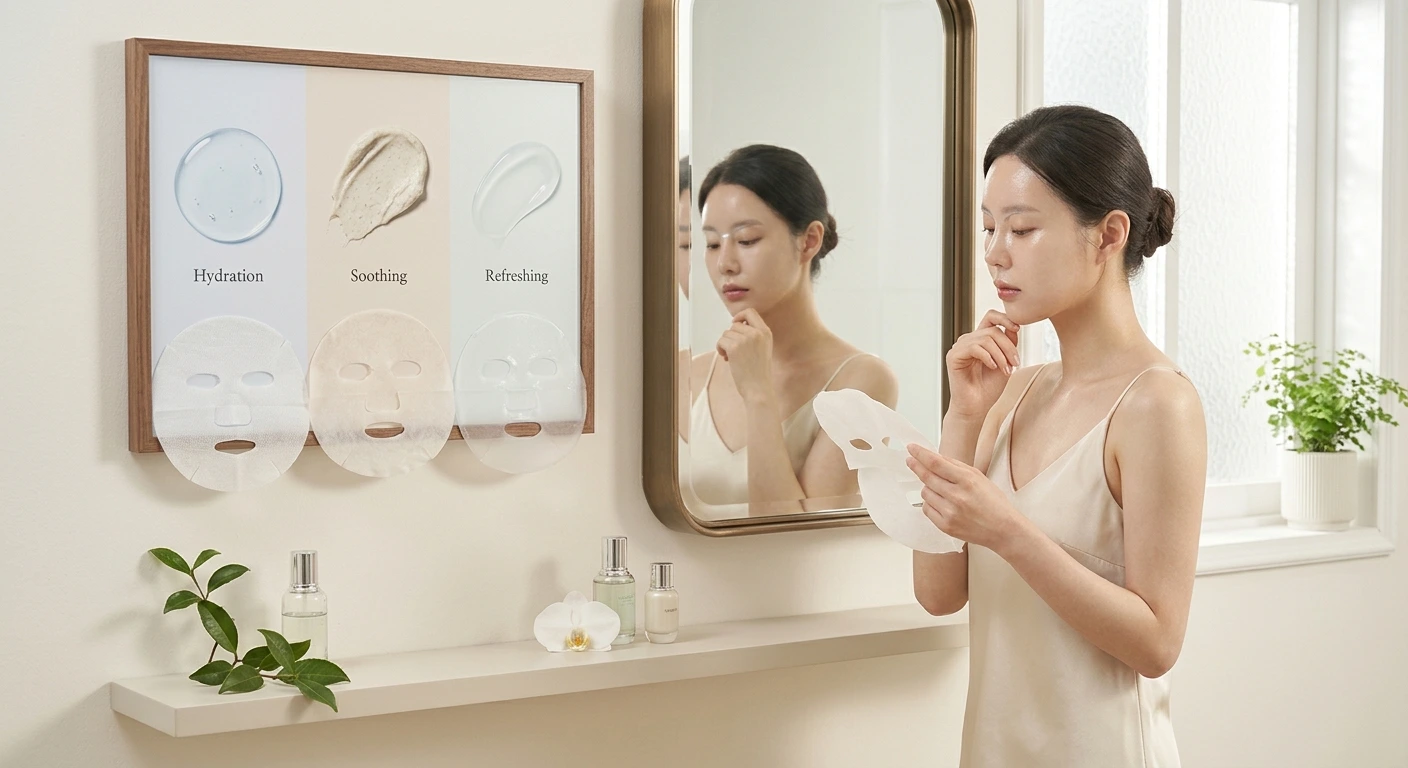
In the landscape of 2026 global skincare, the korean sheet mask remains the most recognizable and accessible entry point into the world of K-beauty. While once considered a simple novelty, these masks have evolved into sophisticated delivery systems that provide a concentrated “boost” to the skin’s baseline condition. The popularity of sheet masks is rooted in the Korean “skin-first” philosophy, which prioritizes deep hydration and barrier health over temporary cosmetic fixes.
However, as the market has expanded, so has the complexity of the choices. Selecting the best korean face mask is no longer just about picking a pleasant scent; it requires an analytical understanding of how different materials, essence viscosities, and active ingredients interact with your specific skin type. Whether you are looking for a korean collagen face mask to improve the appearance of firmness or a korean face mask for glowing skin to achieve a “glass-skin” finish, the right choice depends on matching the product’s formulation to your skin’s current physiological needs.
A korean sheet mask is a single-use, face-shaped sheet made from materials like cotton, cellulose, or hydrogel that is thoroughly saturated with a concentrated essence or serum. Unlike traditional wash-off masks that can dry out on the skin, the sheet acts as an occlusive barrier. This physical seal prevents the active ingredients from evaporating, forcing them to penetrate more deeply into the stratum corneum.
In a standard Korean skincare routine, the sheet mask is a “treatment” step. It is designed to deliver a high dose of nutrients in a short period (typically 10–20 minutes). The materials used have become increasingly high-tech in 2026:
The global obsession with these masks is driven by their unparalleled convenience and immediate visible results. They provide a “spa-like” experience at home for a fraction of the cost. Beyond the luxury aspect, K-beauty formulators excel at “skin conditioning” the process of keeping the skin barrier hydrated and supple so it can better defend itself against environmental stressors.
In 2026, the variety of formulas available is staggering. You can find masks targeting everything from “maskne” to “digital aging” caused by blue light. The focus on high-quality, often traditional, ingredients like Rice and Ginseng, paired with modern bio-tech like PDRN (salmon DNA) and Exosomes, ensures that there is a mask for every conceivable concern. They are the ultimate “emergency” tool for skin that looks tired, dehydrated, or irritated .
Choosing the right mask is an analytical process that involves four main pillars:
By evaluating these criteria, you move away from “trial and error” and toward a data-driven routine that produces consistent results.
Your skin type is the foundation of your selection. A mask that works wonders for dry skin might cause “over-hydration” breakouts on oily skin.
For dry skin, the goal is to replenish lipids and prevent transepidermal water loss (TEWL). Look for masks with a “creamy” or “milky” essence. Key ingredients should include Ceramides, Squalane, and high-weight Hyaluronic Acid.
Oily skin still requires hydration, but it needs it in a “weightless” format. Look for “Aqua” or “Water-gel” essences. Ingredients like Niacinamide (to regulate oil) and Green Tea (for antioxidant support) are ideal.
Combination skin benefits from “balancing” formulas. A lightweight, watery essence that features Xylitol (a rising 2026 trend for cooling) or Birch Juice is excellent. These provide moisture to dry cheeks without clogging the T-zone.
Sensitive skin requires a “less is more” approach. Prioritize fragrance-free and essential oil-free formulas. Centella Asiatica (Cica) and Panthenol (Vitamin B5) are non-negotiable for their soothing properties.
If your skin is “normal,” you have the luxury of choosing based on your desired result. You can rotate between a korean face mask for glowing skin on Mondays and a korean collagen face mask on Thursdays to maintain a healthy, resilient barrier.
Sometimes your skin type is stable, but environmental factors create specific concerns.
To achieve a “glass-skin” look, you need ingredients that improve light reflection. Niacinamide, Rice Ferment Filtrate, and Pearl Extract are the primary drivers here. These ingredients help even out the appearance of the skin tone and provide a “lit-from-within” radiance.
When the goal is a “plumper-looking” complexion, humectants are king. Hyaluronic Acid and Glycerin attract water to the surface cells, making them swell slightly and look more voluminous. This is the fastest way to reduce the appearance of fine lines caused by dehydration.
Dullness is often caused by a buildup of dead skin cells or lack of circulation. Masks containing Vitamin C derivatives or Glutathione can provide a temporary brightening “boost.” Remember, the “post-mask glow” is an immediate result of hyper-hydration, while long-term brightening requires consistent use.
While a sheet mask isn’t a replacement for a medical acne treatment, it can soothe the inflammation associated with breakouts. Look for Tea Tree, Madecassoside, or Salix Alba (Willow Bark). Ensure the essence is watery and non-comedogenic.
If your skin is flushed from the sun or wind, a mask with Mugwort or Aloe can provide immediate relief. These ingredients help lower the skin’s surface temperature, which is a key factor in reducing visible redness.
For skin that shows signs of aging, a korean collagen face mask or a mask with Peptides and Adenosine is ideal. These formulas focus on “skin conditioning” making the skin look smoother, firmer, and more hydrated. While they don’t reverse wrinkles, they significantly improve the appearance of skin suppleness.
The 2026 K-beauty market is defined by “Ingredient Synergy.” Here is what to look for on the label:
These are the foundational humectants. In 2026, look for “Multi-molecular Hyaluronic Acid,” which includes different sizes of molecules to hydrate both the surface and deeper layers of the epidermis.
Known as the “Cica” duo. They are the gold standard for barrier support. If you see these high on the ingredient list, the mask is likely designed for soothing and repair.
A versatile powerhouse. It supports the skin barrier, helps regulate sebum, and improves the appearance of uneven skin tone. It is a staple in almost every korean face mask for glowing skin.
These are the “glue” that holds your skin cells together. If you have dry or “flaky” skin, ceramides are essential for restoring the moisture seal.
Yes. The material determines how much essence the mask can hold and how well it transfers that essence to your skin.
The traditional choice. They are affordable and comfortable. However, they can sometimes “dry out” faster than synthetic materials.
These are the “premium” choice in 2026. Bio-cellulose is a natural fiber that can hold up to 100 times its dry weight in fluid. It creates a perfect seal, ensuring no essence is wasted.
These are essentially “solidified serum.” They provide an immediate cooling effect and are excellent for “plumping” the skin. They are often used in korean collagen face masks for a more intensive experience.
Sheet masks are unique because they provide the highest level of occlusion, making them the best choice for immediate hydration.
To get the most out of your korean sheet mask, follow this professional sequence:
Most masks are designed for 15 minutes. If you leave a mask on for too long (e.g., an hour or overnight), a process called “reverse osmosis” can occur, where the drying sheet starts pulling moisture out of your skin.
Generally, no. The essence is meant to stay on your skin. However, if the essence feels uncomfortably sticky or if you have extremely oily skin, you can gently rinse with water but you will lose some of the benefits.
Yes. The essence is a humectant; it needs an occlusive “lid” (moisturizer) to stay in the skin. Skipping this step can lead to the hydration evaporating quickly.
Frequency depends on your skin’s needs.
While generally safe, no product is universal.
A sheet mask is a “booster,” not a replacement.
The best mask is the one that matches your skin type. For hydration, Mediheal N.M.F is a top-tier choice. For soothing, Abib Heartleaf Sticker is a leader in 2026.
2–3 times a week is ideal for most people.
Yes, if it is a gentle, hydrating formula. Avoid daily use of exfoliating or highly fragranced masks.
No, pat the essence in. Only rinse if the instructions specifically say to do so.
Yes, by hyper-hydrating the skin, they make it look smoother and more reflective, creating a temporary “glass-skin” glow.
Many are, but you must choose fragrance-free options with soothing ingredients like Centella or Panthenol.
Finding the right korean sheet mask is a journey of understanding your skin’s unique language. By identifying your skin type, targeting your primary concern, and vetting the ingredients and materials, you can transform a simple 15-minute ritual into a powerful skin-conditioning treatment.
The most effective mask isn’t necessarily the most expensive or the most viral it’s the one that leaves your skin feeling calm, hydrated, and resilient. You can explore a curated selection of the latest 2026 K-beauty innovations, including the best korean face masks for every skin type, at KoreanBeautyBar. Start your journey to healthier, more radiant skin today by choosing a mask that truly understands your needs.