FREE SHIPPING
On all US orders over $100
Get 15% off your first order:
100% Authentic K-Beauty
• Direct US Shipping
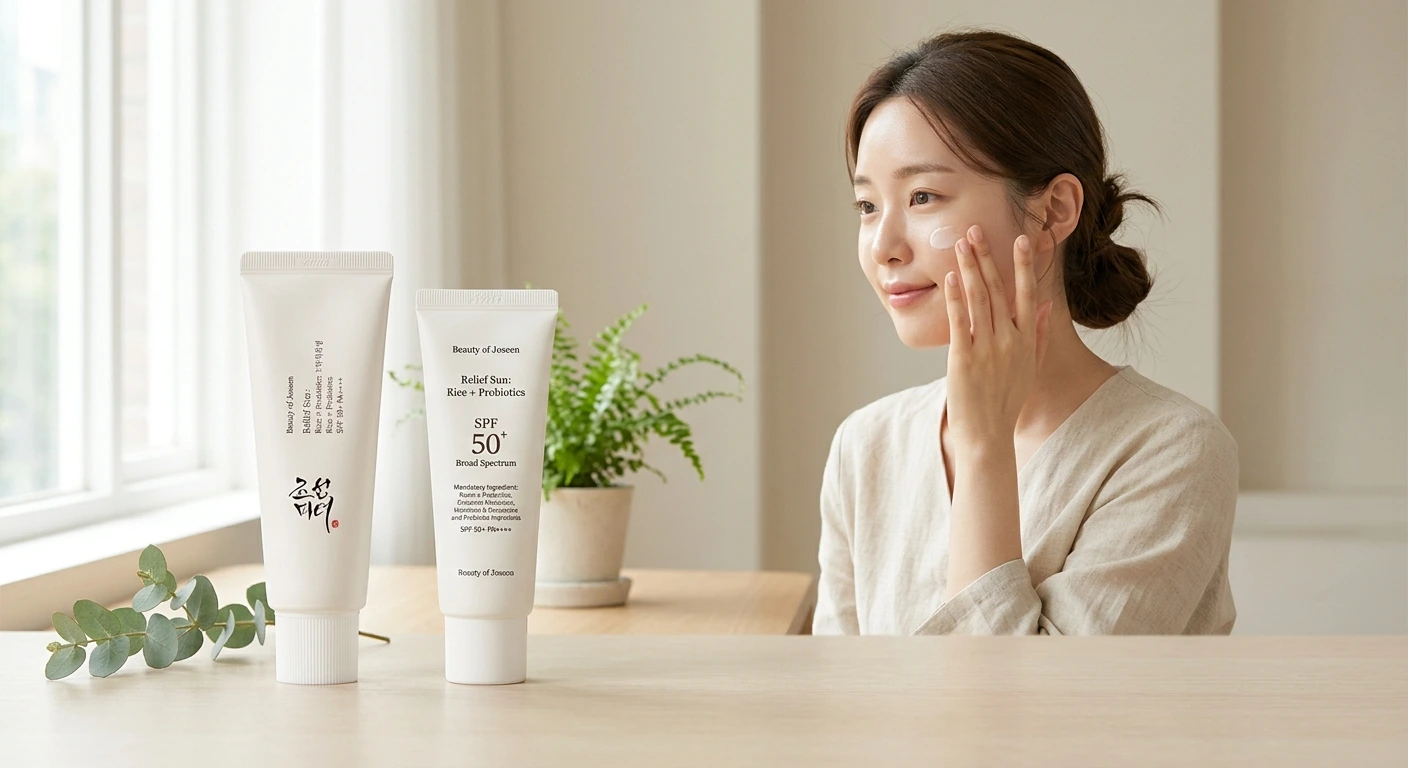
The Beauty of Joseon Relief Sun: Rice + Probiotics has become a global phenomenon, frequently topping “Best Seller” lists in the K-Beauty category. However, as its popularity has grown in the United States, a common question has emerged among savvy consumers: Is the Beauty of Joseon sunscreen sold in Korea the same as the one available in the U.S.?
Understanding the nuances of beauty of joseon sunscreen korean vs american is essential for ensuring you are getting the specific formulation and protection level you expect. This article will compare these versions across labeling, regulatory status, ingredient composition, and availability to help U.S. shoppers make an informed decision in 2026.
Consumers should not automatically assume that Beauty of Joseon sunscreen products sold in different global markets are identical. In 2026, the global beauty landscape remains divided by local regulatory requirements that dictate how sunscreens are classified, tested, and labeled.
Differences between the Korean and American versions can result from the U.S. Food and Drug Administration (FDA) standards versus the South Korean Ministry of Food and Drug Safety (MFDS) guidelines. These differences often manifest in the specific UV filters permitted, the terminology used on the packaging (such as the PA rating system), and even the official product name. Before making a purchase, it is vital to verify the specific version you are receiving, as the “American version” may be tailored to meet U.S. OTC (Over-the-Counter) drug monograph requirements, while the “Korean version” follows “Functional Cosmetic” protocols .
The beauty of joseon korean sunscreen, specifically the Relief Sun Rice + Probiotics, is a chemical sunscreen that gained viral status for its “skincare-first” approach. Unlike traditional sunblocks that feel heavy, this korean beauty of joseon sunscreen is celebrated for its lightweight, cream-like texture that mimics a high-end moisturizer.
Infused with 30% rice extract and grain-fermented probiotics, it is designed to nourish the skin barrier while providing high-level UV protection. Its popularity stems from its “Glass Skin” finish—leaving no white cast and providing a dewy, hydrated glow that layers perfectly under makeup. In the Korean market, it is classified as a functional cosmetic, undergoing rigorous testing to confirm its SPF 50+ and PA++++ ratings, making it a staple for those seeking daily-wear sun care that doesn’t feel like a chore.
When comparing beauty of joseon sunscreen korean vs american, the core differences lie in regulatory compliance and labeling. In Korea, sunscreen is a “Functional Cosmetic,” whereas in the U.S., it is regulated as an “OTC Drug.” This distinction impacts everything from the ingredient list to how the product is marketed. In 2026, many beauty of joseon sunscreen us vs korean discussions focus on whether the UV filters are identical, as the U.S. FDA has not yet approved several advanced filters commonly used in the Korean formulation, such as Uvinul A Plus or Tinosorb M.
On the Korean-market packaging, look for the SPF 50+ and PA++++ ratings clearly displayed. The text will often be in Korean, featuring the manufacturer “Kolmar Korea” (a leading manufacturer for high-end K-Beauty). Check for the authenticity seal or QR code, which many Korean brands now include to combat the rise of counterfeit products in the global market.
U.S. shoppers should look for “Drug Facts” panels if the product is officially registered as a sunscreen in the U.S. However, many U.S. consumers actually purchase the imported Korean version through international retailers. If a version is specifically made for the U.S. market, it may use different UV filters (like Avobenzone or Zinc Oxide) to comply with FDA monographs, and it will not use the PA++++ rating, as the FDA uses “Broad Spectrum” terminology instead.
The only way to confirm if the formulas are identical is to compare the official ingredient lists for the specific batch and version. Even if the star ingredients (Rice and Probiotics) are the same, the “inactive” ingredients or the specific UV filters may vary to meet local safety standards. In 2026, some brands create “Global Versions” to unify their supply chain, but for Beauty of Joseon, the Korean version remains the most sought-after due to its use of advanced, non-greasy UV filters not yet standard in the U.S. .
The existence of different versions is primarily due to the Sunscreen Innovation Act and the slow pace of FDA approval for new UV filters in the United States. While the Korean MFDS quickly approves modern filters that offer better cosmetic elegance and stability, the U.S. FDA treats sunscreens as drugs, requiring decades of clinical data for new filters. Consequently, a brand like Beauty of Joseon may offer its original formula via international shipping while potentially creating a modified version for U.S. retail shelves to avoid legal complications regarding unapproved drug ingredients.
The beauty of joseon sunscreen korean version is prized for its “invisible” feel. K-Beauty consumers prioritize products that do not disrupt their multi-step skincare routine or their makeup base. This beauty of joseon sunscreen korean formula is specifically engineered to be “low-pilling,” meaning it won’t ball up when foundation is applied over it. Its ability to provide a “lit-from-within” glow without the oiliness associated with Western sunscreens has made it the gold standard for “everyday” facial protection .
In Korea, protection is communicated via SPF (UVB protection) and the PA system (UVA protection), with PA++++ being the highest. In the U.S., the FDA uses the “Broad Spectrum” label to indicate UVA protection. While an SPF 50 rating is comparable across both regions, the PA++++ rating provides a more granular look at how well the product prevents long-term skin aging. Consumers should check the label of their specific version; the Korean version will explicitly state PA++++, while a U.S.-compliant version will focus on the “Broad Spectrum” claim.
Yes, it is widely available, but the source matters. You can find it on major K-Beauty export sites and select U.S.-based boutique retailers. However, as of August 2026, it is not always found in traditional U.S. drugstores because the original Korean formula contains UV filters not yet “monographed” by the FDA. Shoppers should prioritize authorized retailers like Olive Young Global or the official Beauty of Joseon website to ensure they are getting a legitimate product.
Yes, U.S. consumers can purchase the korean sunscreen beauty of joseon through international shipping. When doing so, it is important to check the seller’s reputation and shipping conditions, as extreme heat during transit can occasionally affect the stability of the formula. Shoppers should be aware that imported versions will feature Korean labeling and follow Korean testing standards, which many enthusiasts prefer for the inclusion of modern UV filters.
The term “better” is subjective. The korean version is often preferred by those who want the latest UV filter technology and a more “serum-like” texture. However, a U.S.-market version (if available) offers the peace of mind of FDA oversight and easier local returns. If you value cosmetic elegance and the specific “Rice + Probiotics” benefits that made the brand famous, the original Korean formulation is generally considered the “authentic” experience that built the brand’s reputation .
| Feature | Korean Version | U.S. Version (Import/Market Specific) |
| Regulatory Body | MFDS (Functional Cosmetic) | FDA (OTC Drug) |
| UV Filters | Modern filters (e.g., Tinosorb M) | FDA-approved filters only |
| UVA Rating | PA++++ | Broad Spectrum |
| Texture | Lightweight, Rice-cream texture | May vary based on filters used |
| Packaging | Korean/English mix | English-dominant / Drug Facts label |
| Availability | International K-Beauty sites | Selected U.S. retailers |
| Authenticity | QR code / Seal | Verified via authorized distributor |
If you are looking for the viral “Glass Skin” effect and don’t mind international shipping, the Korean-market version is the best choice. It represents the original intent of the formulation. However, if you have highly reactive skin and prefer products that strictly follow U.S. FDA monographs for peace of mind, ensure the product you buy is labeled for the U.S. market. Always buy from trustworthy sources to avoid the high volume of “fake” Beauty of Joseon products currently circulating on unverified third-party marketplaces.
To identify your version, check the following:
Yes, differences often exist in labeling and regulatory classification. The Korean version uses advanced UV filters approved by the MFDS, while a version officially sold as a “sunscreen” in U.S. retail must comply with FDA-approved filter lists.
Yes, Beauty of Joseon is a South Korean brand that draws inspiration from “Hanbang” (traditional Korean herbal medicine) combined with modern skincare science.
The Korean version is the original Relief Sun: Rice + Probiotics SPF 50+ PA++++. It is known for its lightweight, moisturizing texture and its use of modern chemical filters.
It is available via international K-Beauty retailers and some U.S.-based specialty shops, but availability in major “big-box” U.S. retailers may be limited by FDA regulations.
Yes, the flagship Relief Sun is rated SPF 50+ PA++++, providing high-level protection against both burning (UVB) and aging (UVA) rays.
The main differences are the regulatory framework (Cosmetic vs. Drug), the specific UV filters allowed, and the labeling (PA system vs. Broad Spectrum).
Yes, you can purchase it through reputable international K-Beauty exporters who ship directly to the United States.
Many users prefer the Korean version for its superior cosmetic elegance and advanced UV filters, but the “best” version depends on your personal regulatory preferences and skin sensitivity.
When choosing between the Beauty of Joseon sunscreen korean vs american versions, the decision ultimately rests on your preference for modern UV filters versus local regulatory familiarity. In 2026, the original Korean formulation remains the global gold standard for its unique texture and skin-brightening benefits. Regardless of which version you choose, always verify the ingredient list and purchase from a trustworthy source to ensure you are receiving the high-quality protection that Beauty of Joseon is known for.